
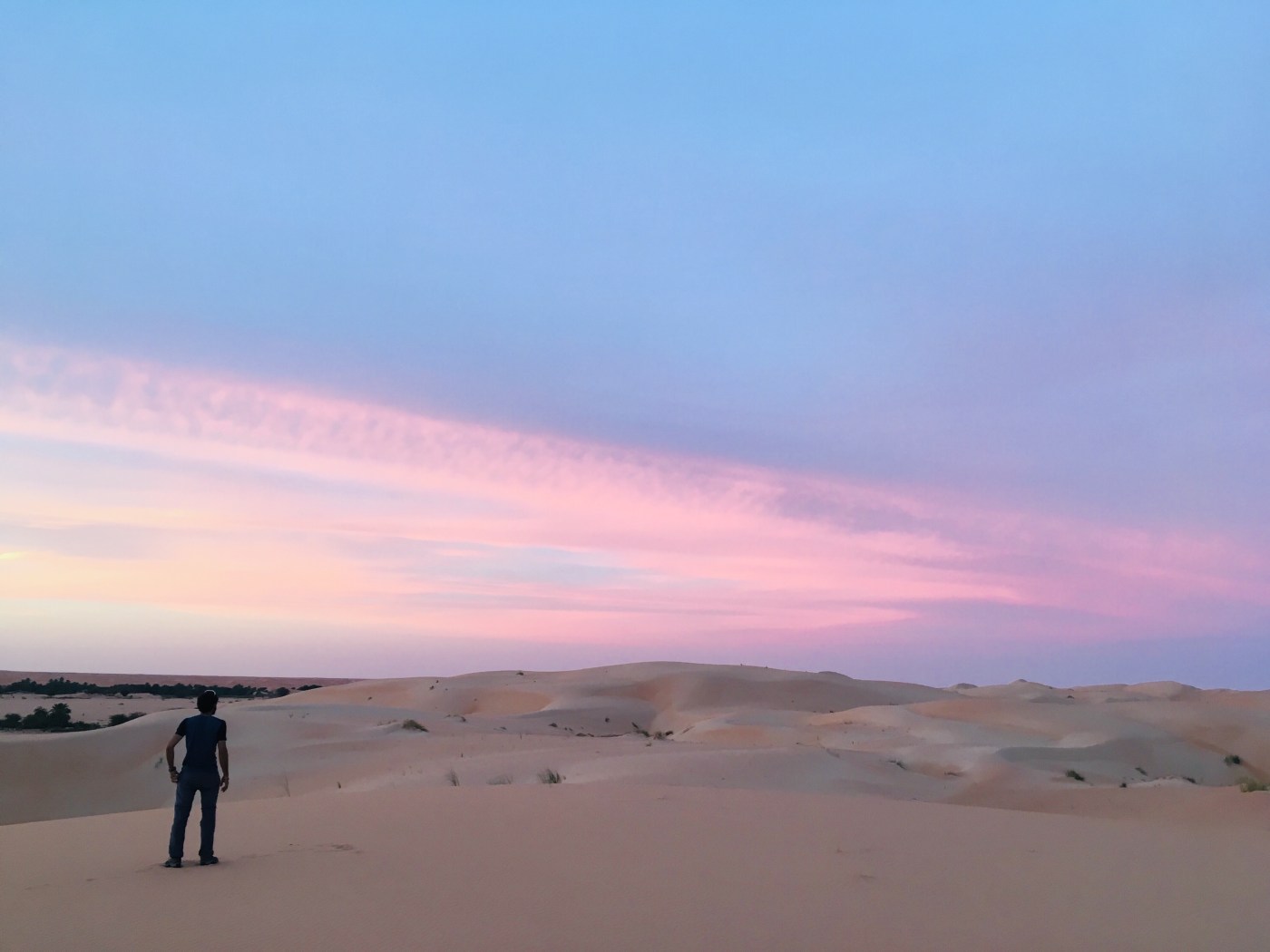
Day 67: Bir Gandouz – Nuadibou
We wake up with a mix of feelings, a bit nervous but also excited and eager to face this delicate border of Guerguerat. We pull a bit of money from an ATM, pretty much because we just have the 55€ for the Mauritanian Visa. We have no idea what’s gonna happen in Mauritania, so a bit of extra money will not be useless. We leave Bir Gandouz and decide to go to the toilet, some 100 m from the road, each of us to one side. There is not much to hide but it’s like 8 AM and no traffic, who is gonna see us? Well, 2 minutes after THE WHOLE UNITED NATIONS comitive passes in 10 Jeeps, while we… let’s leave it there. So shameful.
The cycle is a bit harder as the road goes up and down all the time and it is hard to get a good pace. But the wind still pushes us, and the cool moon-like landscape with weird rock formations amongst white dunes motivates us. Every time a truck passes by, it feels like eating a bucket of sand. At least some of them compensate by stopping and giving us water. This makes us feel safe knowing that we would never lack water even in the Sahara. We arrive to Guerguerat with the first sign that warns not to leave the road as there are explosive mines around. Ufffff. A lot of military buildings follow and then, finally, the border crossing area. It is mainly truck drivers on the Moroccan side. There are also quite a lot of Subsaharian presumably living in Europe returning home. We smile to each other: let’s do this.

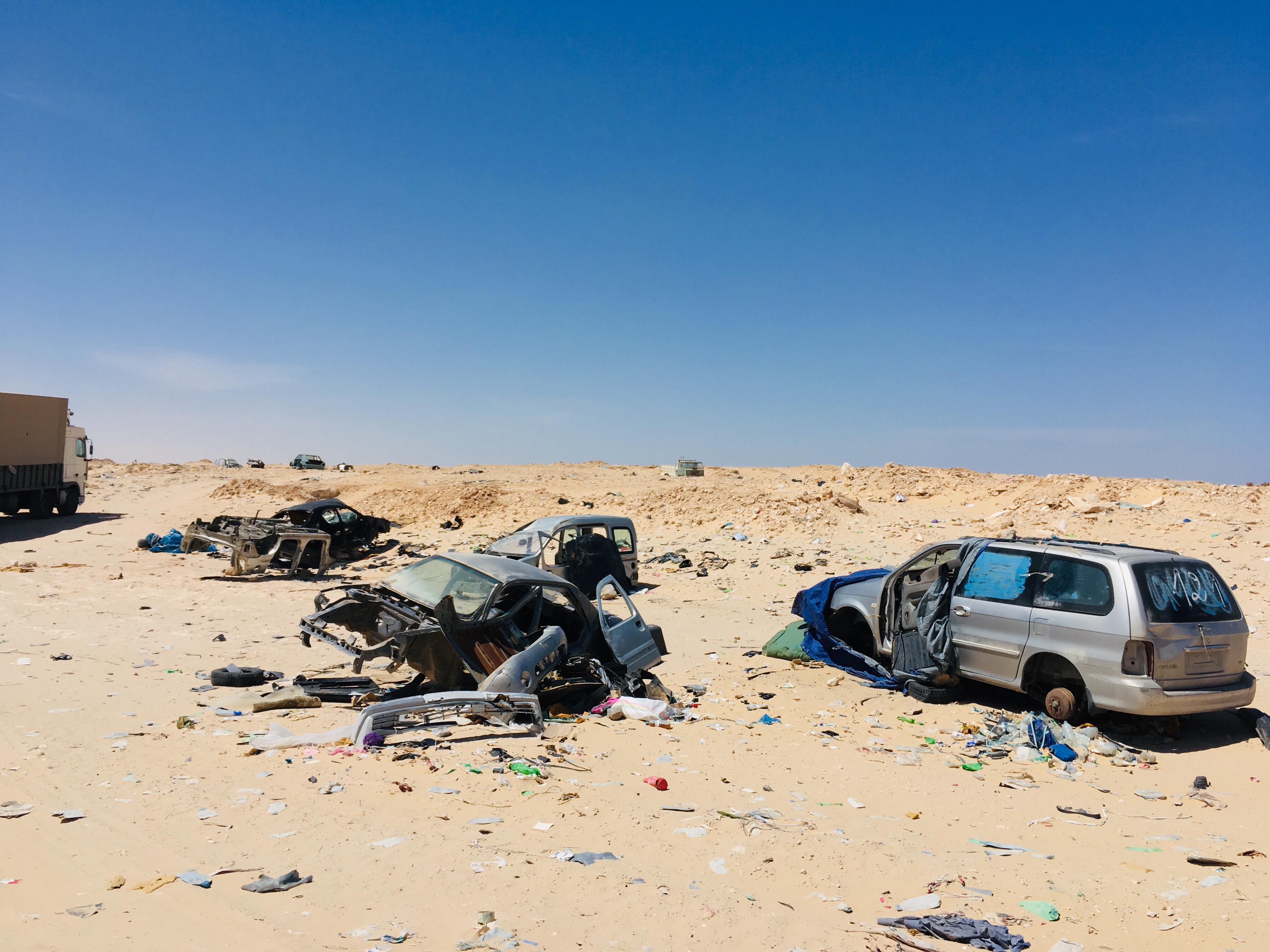
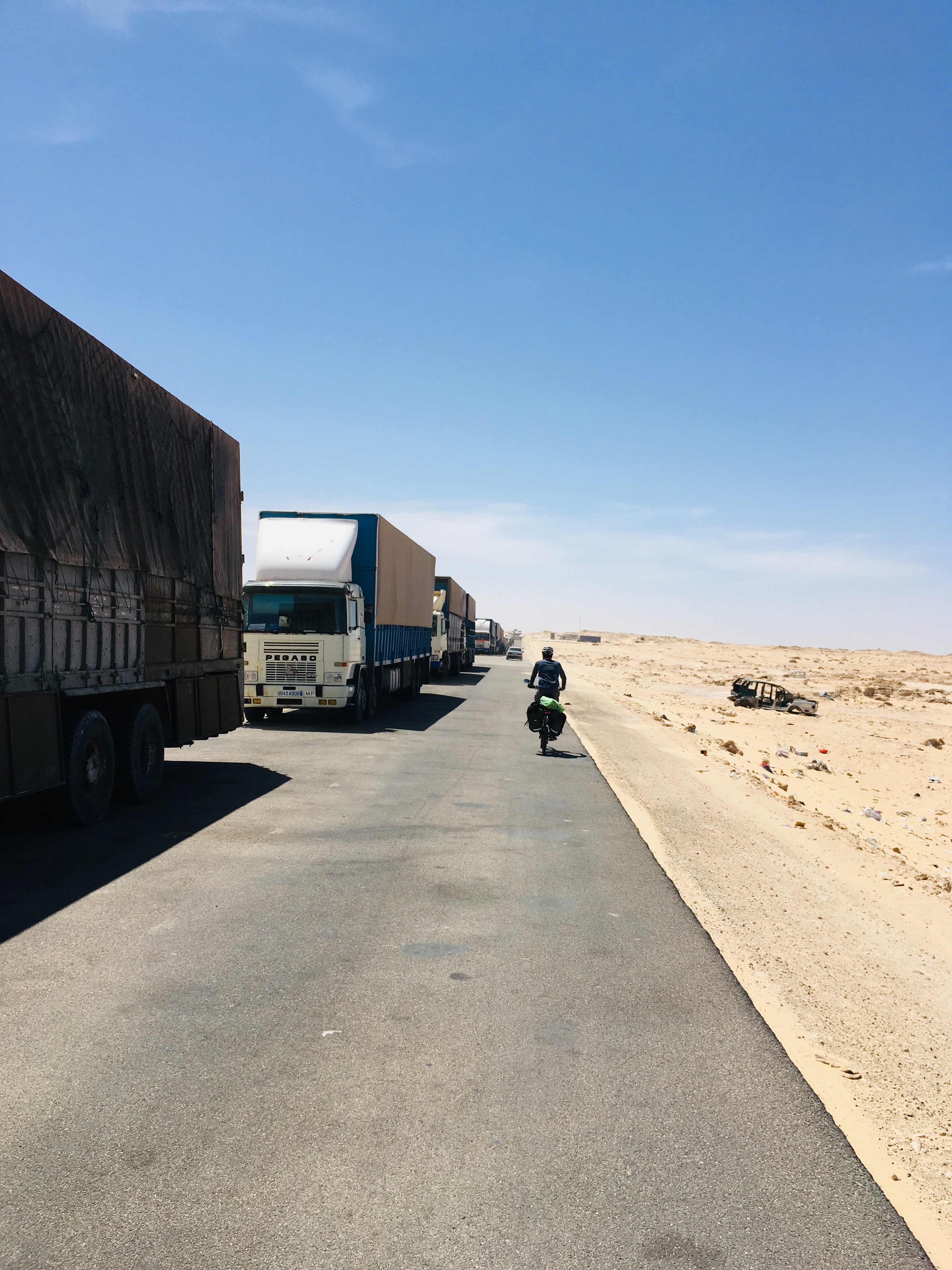
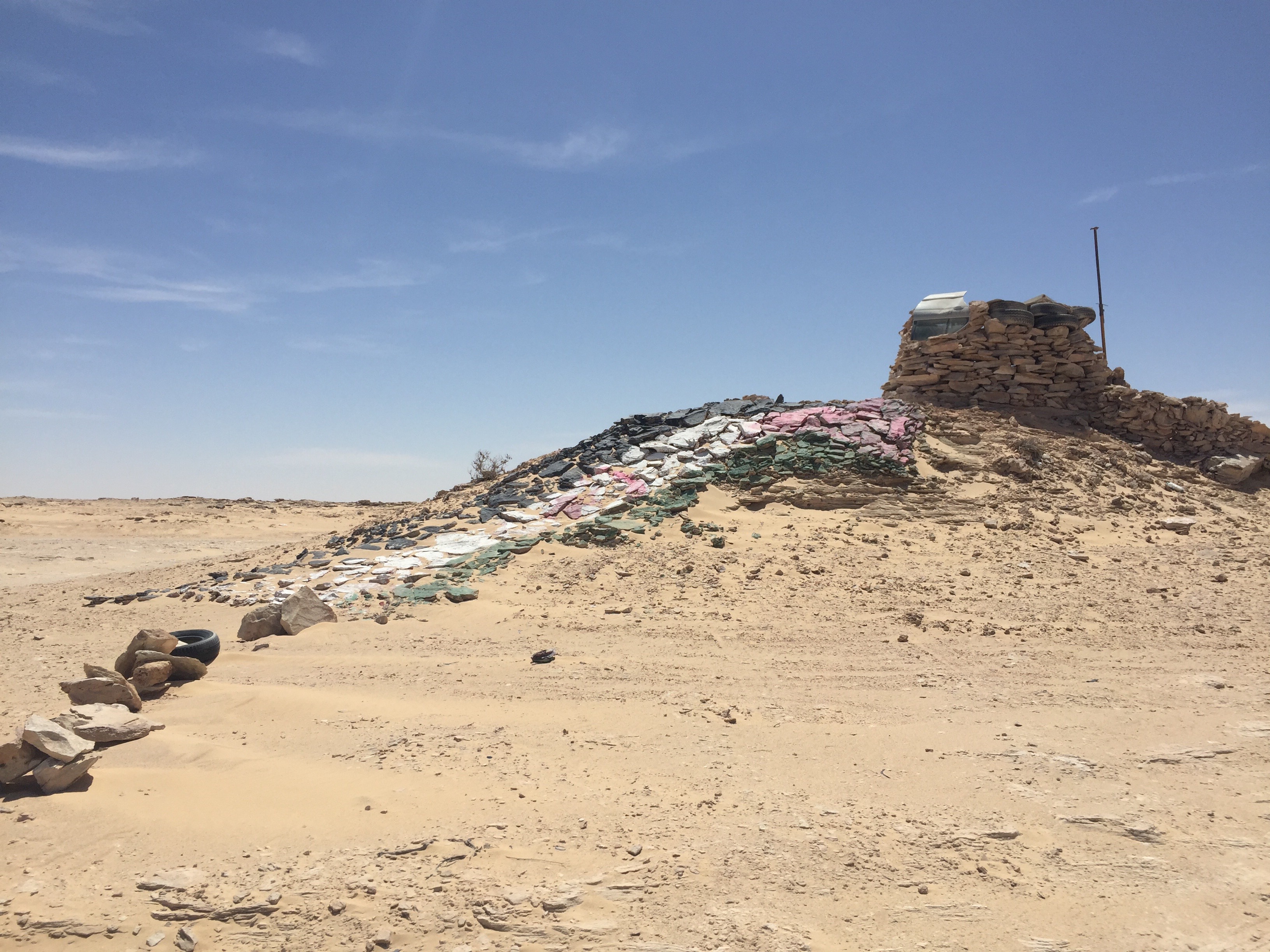
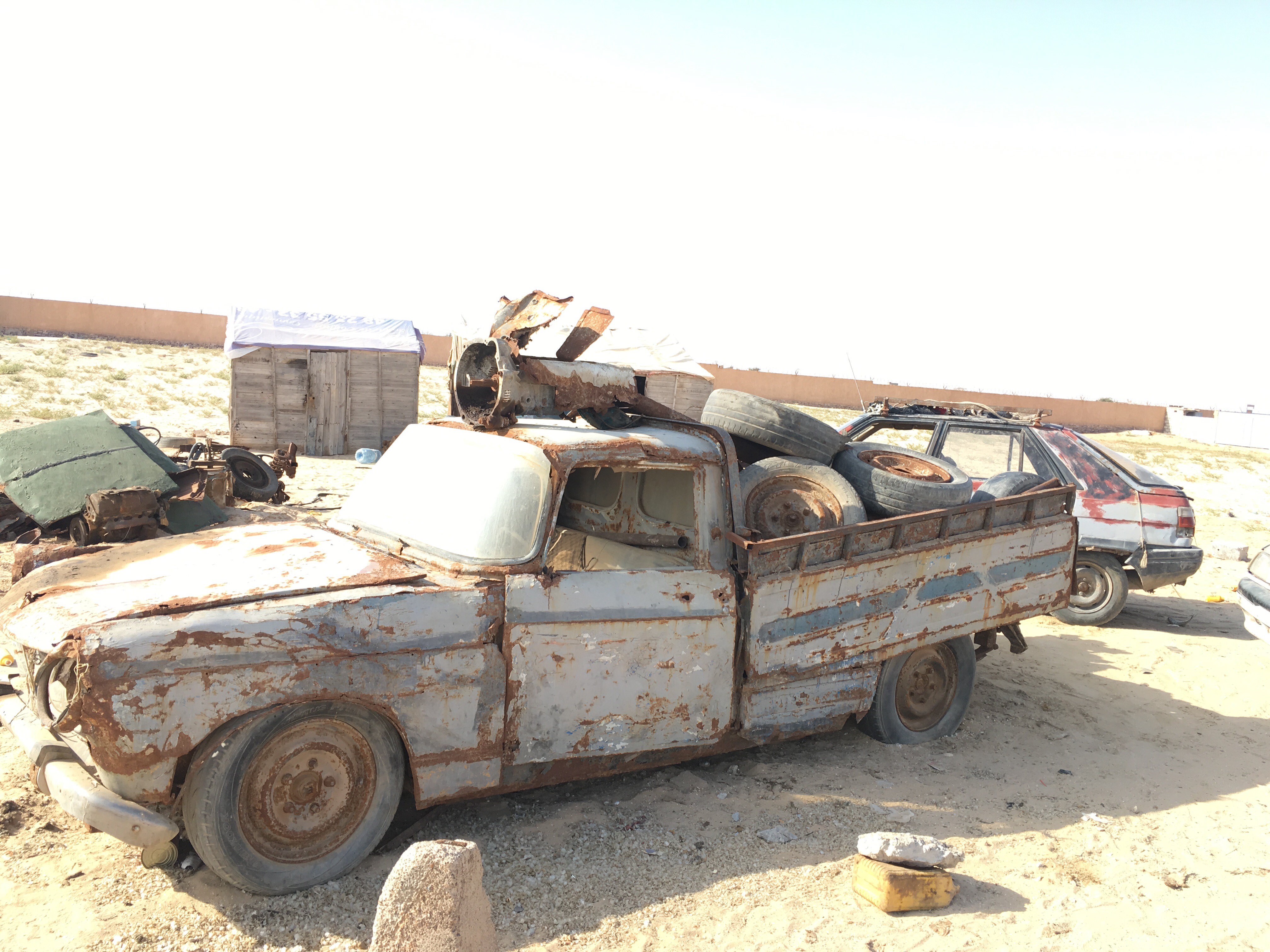
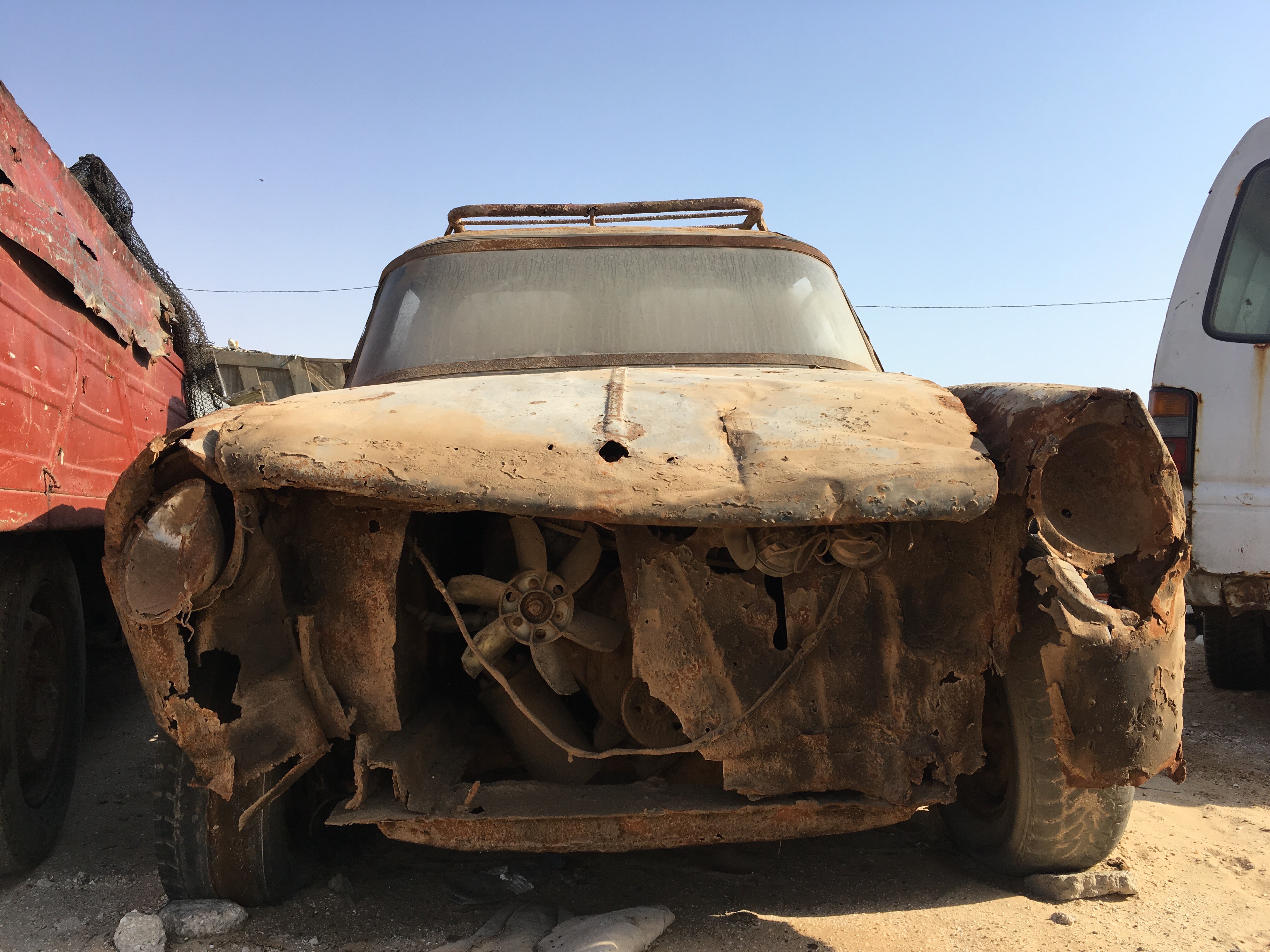
Leaving the moroccan side turns quite easy. While we do the “check out”, we can already see lots of people in the “no man zone”. There is a huge amount of migrants, some of them women with kids, just waiting in front of the entrance to “Morocco”. There is a line of around 100 trucks waiting their turn to pass. We start cycling fast, not even looking at the people that offer us money exchange. The area looks like a war zone – it is technically a war zone, actually-, with dozens of burned or destroyed cars around the road. Some people are camping in small jaimas partially covered by sand. We wonder how can they leave permanently there. Eventually, the road ends and a terrible off road starts. Here is where the Polisario Front periodically displays military units and blocks the truck traffic. Not today. We see one of their posts: it is abandoned and has a huge saharaui flag almost totally covered by sand. Trucks face enormous difficulties to cross this area: we are faster than them. In the distance, we see some Jeeps that get deep in the desert in the no man zone, we guess they are Polisario. Anyways, a bit later we arrive to the Mauritanian border, with a feeling of relief but also of “weird disappointment”. It was not so crazy, after all.
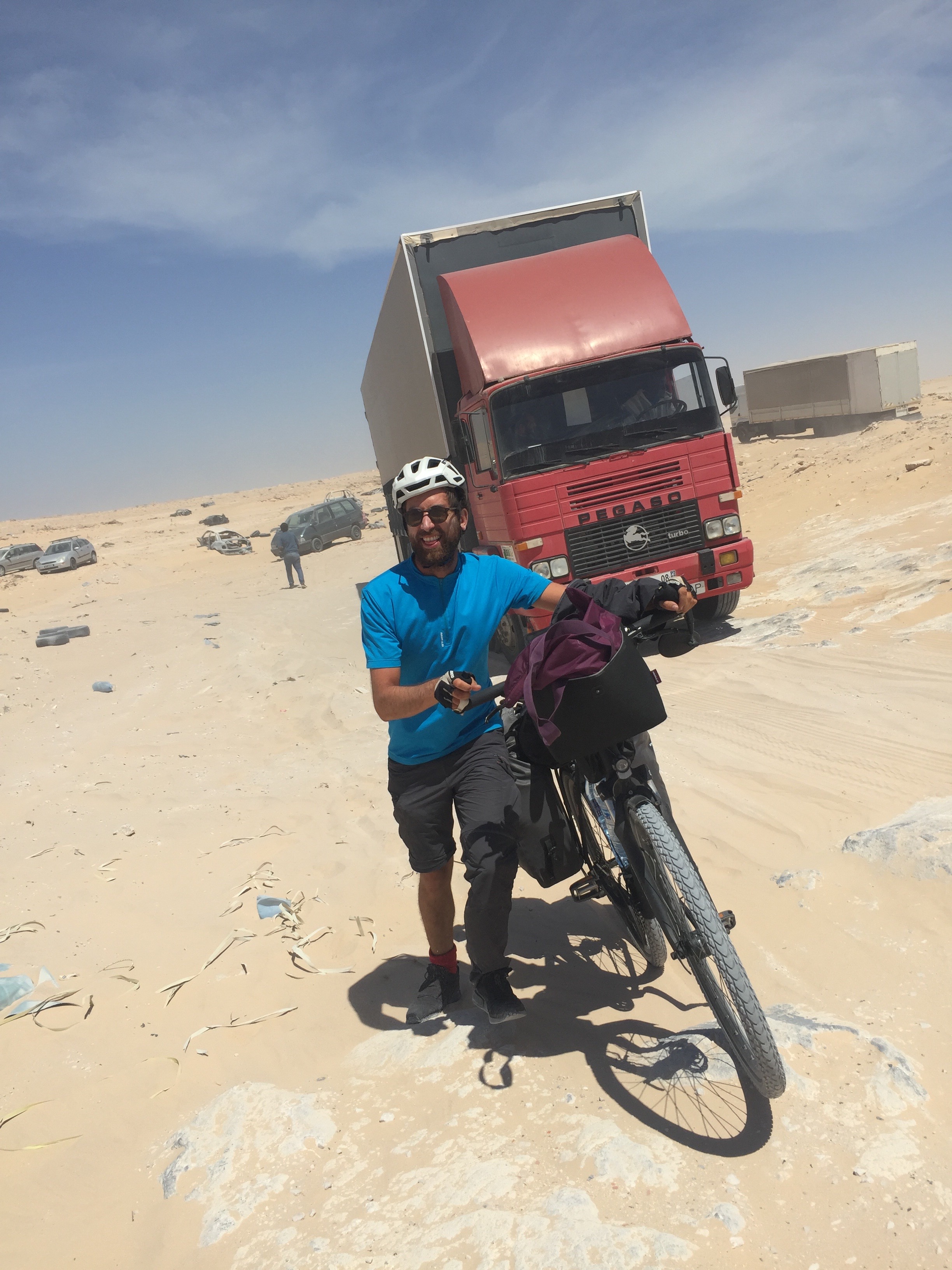
As soon as we arrive, two huge dogs run to us to smell our bags in search of drugs. They are scary as hell. Drug possession can imply life sentence in Mauritania. Drinking, imprisonment. Homosexuality, death penalty. No jokes doing stupid stuff here. The visa procedure turns out to be quite easy. One officer is sitting in front of a computer, but takes out a piece of paper and start writing down our passport information on it. Not a very used computer I guess. We then queue to get our visa and pay the 55€ fee. You need to have the exact amount (in notes not coins) in euros. They will not give you any money back. Observing the officers tells us already a bit about the country. It is a mix of saharaui people and black africans, living together in an apparent peace. The main language is Hassania, just as in Western Sahara, although Wolof, the main language of Senegal, is also spoken in the south.
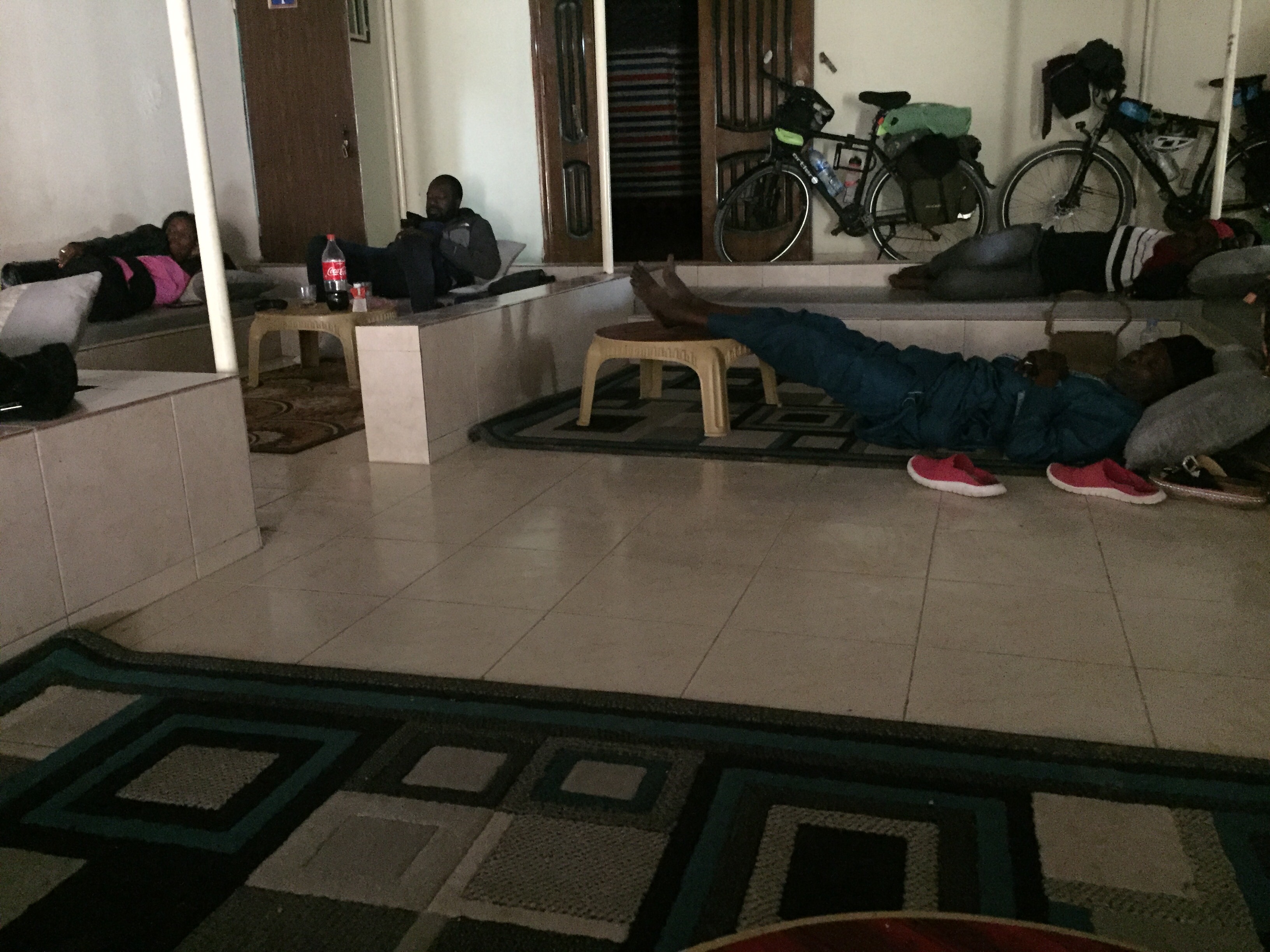
We leave the border and out of chance we meet Jali, a saharaui man living in Spain for almost all his life. He invites us to a cafe in a huge lounge where we can rest. It is full with exhausted migrants, lying on the bed, some of them looking quite desperate. I guess it must be extremely difficult to pass legally to Morocco. Jali helps us to get a Mauritanian Sim card at the right price, and tells us his story. He works as a commercial agent for a Spanish company importing materials from Mauritania. He loves Spain and he is deeply grateful for the help of many Spanish people to the Saharaui cause. He dreams of a free Sahara, so his parents, which are living in Mauritania, can return home. We hope so to. Good luck, sahbi.
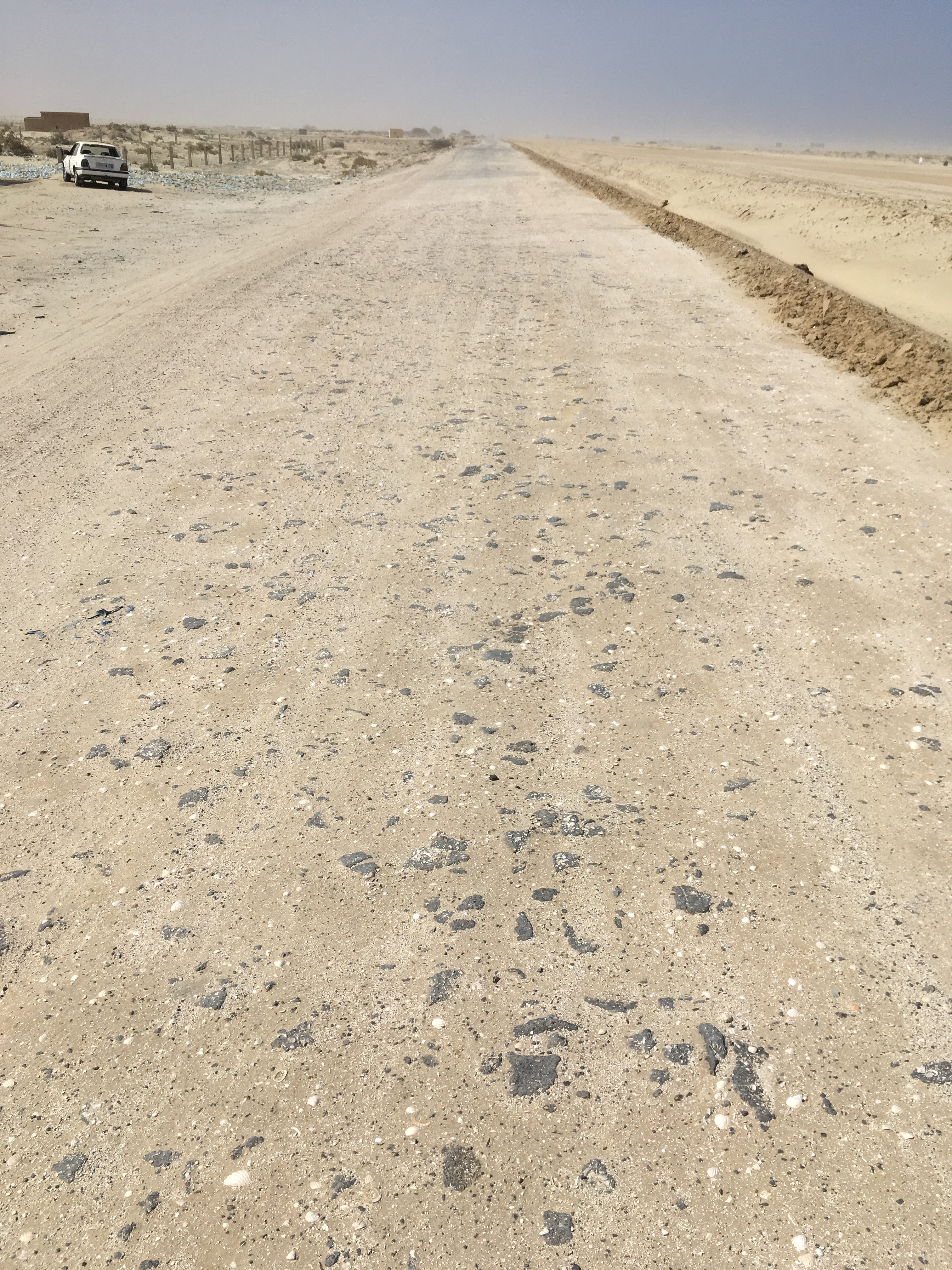
We take the road to Nuadibu, the second largest city in Mauritania, which lies in a peninsula. This means that going back up will be very difficult. The accumulation of the 100 km already cycled and the high quantity of sand carried by the strong wind makes the end of the day difficult. We wanted to take a break on the way and explore the famous boat cemetery but due to recent Chinese investments all the boats have been removed. Just as in Morocco, we are regularly stopped at checkpoints controls from either the police, the gendarmerie or customs. Some on the signs inviting cars to slow down are funnily hand written, with drops of painting falling down. Every time we need to give a passport copy, and indicate where we are going to sleep.
Wikipedia says that Nuadibu has 90’000 people. Impossible. It looks like three times that, at least. Driving through its main street is quite intense: cars cross side to side all the time. donkeys, goats, cows block you all the time. It is critical to be focused. We check the sleeping recommendation of our UN friend in Bir Gandouz (post #13), but we find it a bit too expensive for what it is. So we head to the port, looking for this famous Chinese restaurant that serves cold beer in a country where alcohol is illegal.
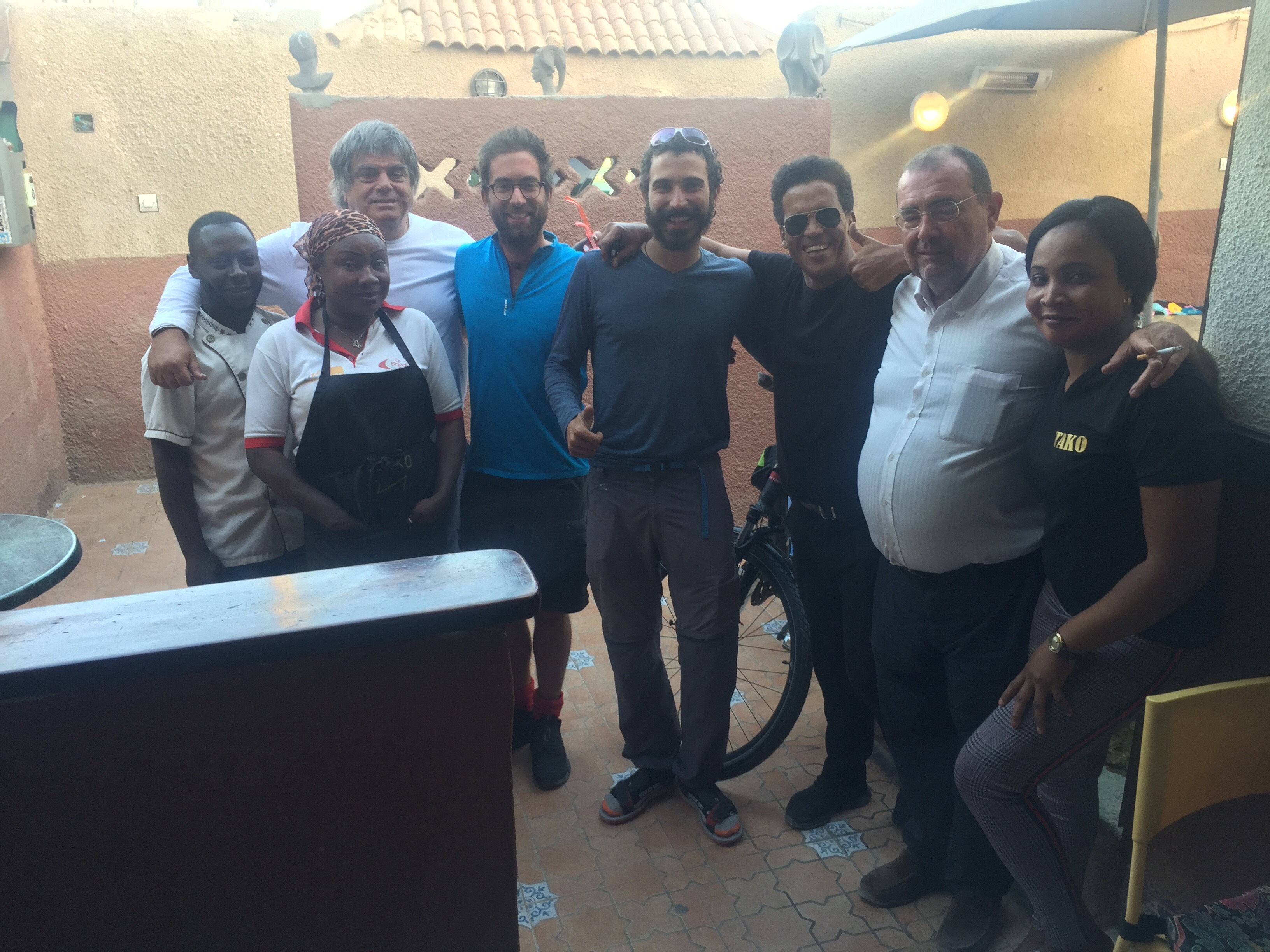
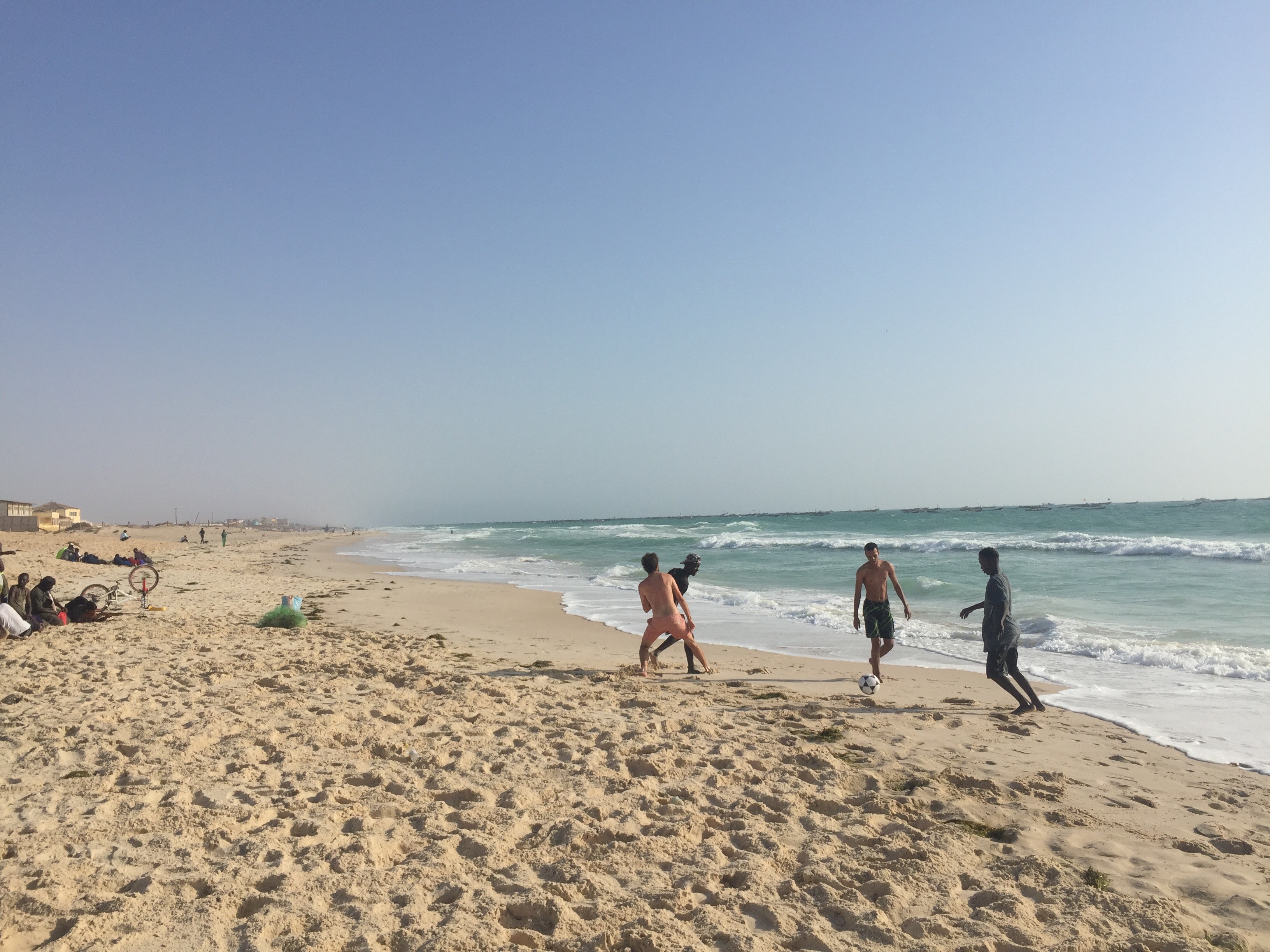
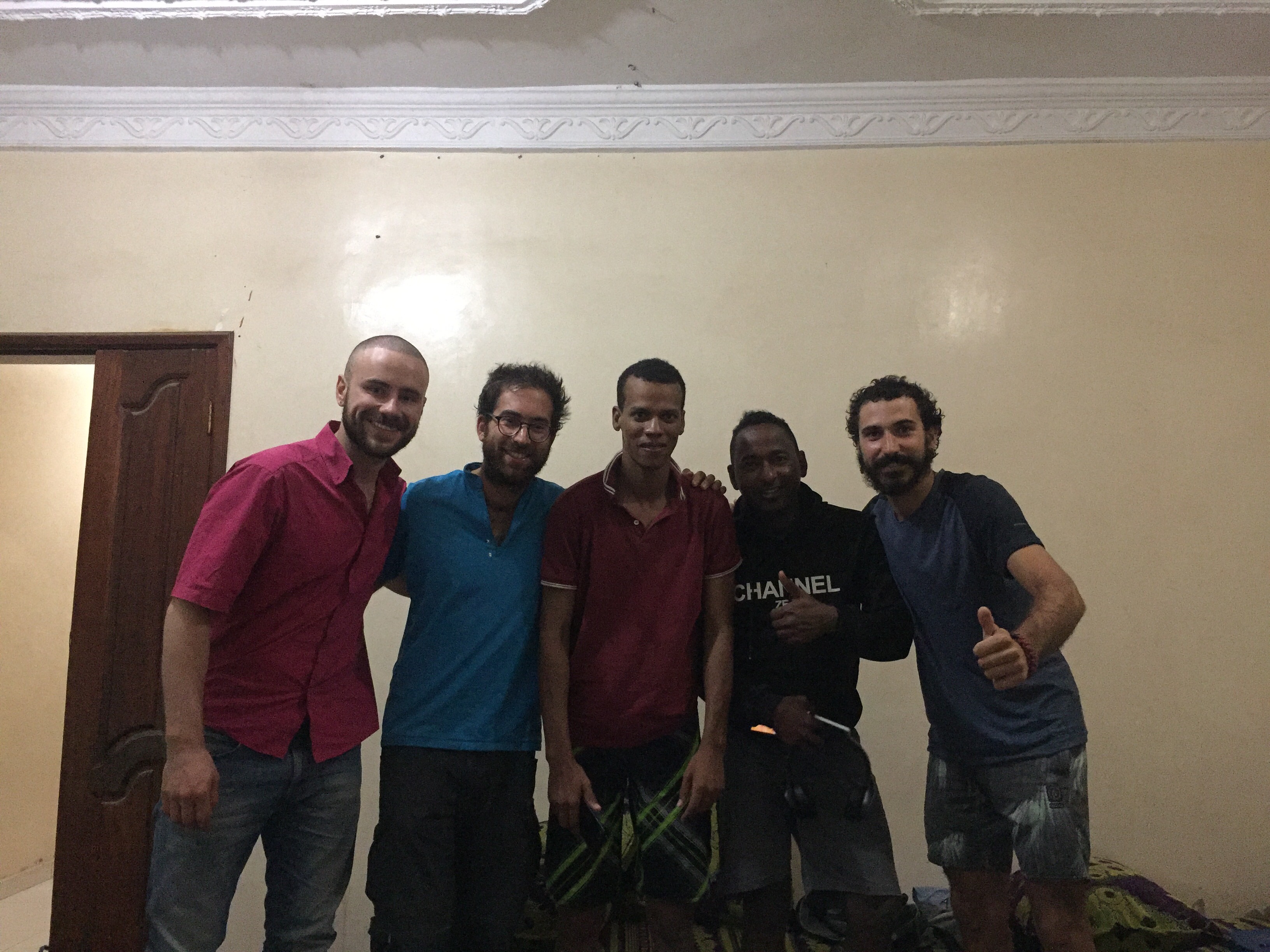
Life is a succession of random events. It cannot be explained otherwise. We were lucky enough to be at the right place at the right time. As we are strolling through Nuadibu looking for a cheap hotel, a man hears us speaking Spanish and comes to us. “Hey, why don’t you check the hotel of my friend, he is also Spanish”. It looks very expensive, so we initially decline, but the man is so nice to us that we quickly engage in a long conversation. Salama is a Mauritanian successful businessman, around 40, that used to be a professional football player in Spain. Luis is around 60, from Canary Islands and has a fascinating life story. He arrived to Nuadibu in the 80s and currently runs a small but super nice hotel that serves as meeting point for the Spanish expat community. Fascinated about our adventure, they invite us to a squid sandwich and a pint of beer. Yeah, 2 hours after arriving in alcohol free Mauritania we are already drinking it. The evening turns super interesting, exchanging stories and getting a whole new perspective about the country. Salama insists to pay our night in a nearby hotel. We try to politely decline but turns impossible. These two guys are too nice. What a welcome in Mauritania.
Day 68: Nuadibou – Train Station
The owner of Camping “baie du levrier” is a exiliated Saharaui that speaks very good Spanish from his time in El Aaiun. In the hotel we meet Zoubir, an Englishman in his 50s that recently became a Muslim. He is living in the desert in Chinguetti and he wears proudly the bubu, the Saharaui chilaba. He invites us for a coffee in a local expat restaurant, and we of course talk about religion and why he decided to embrace Islam.
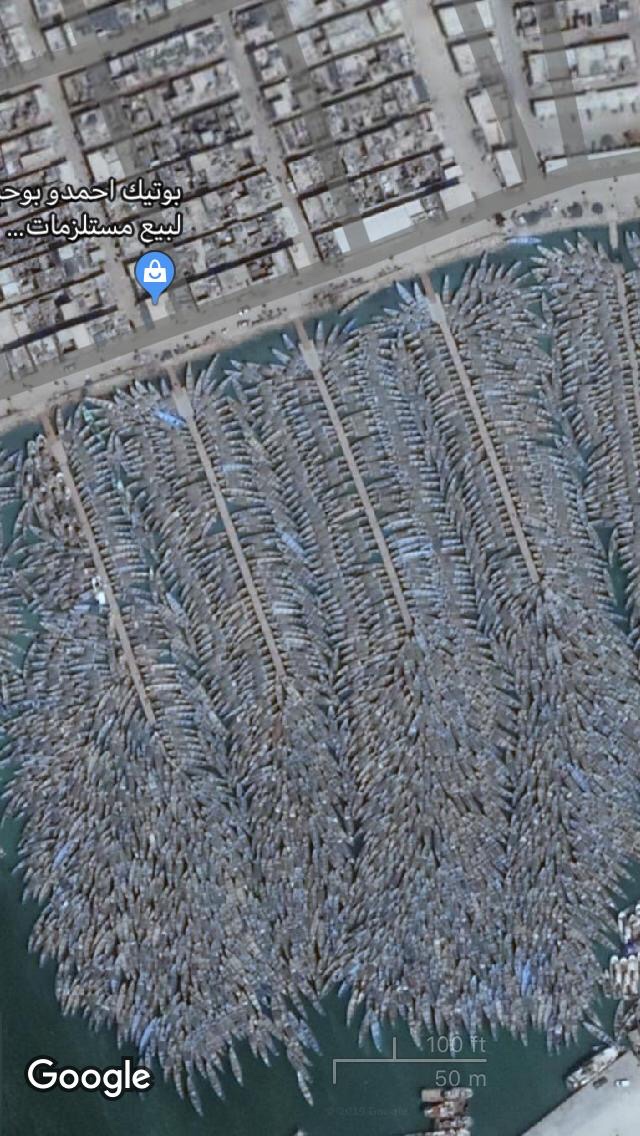
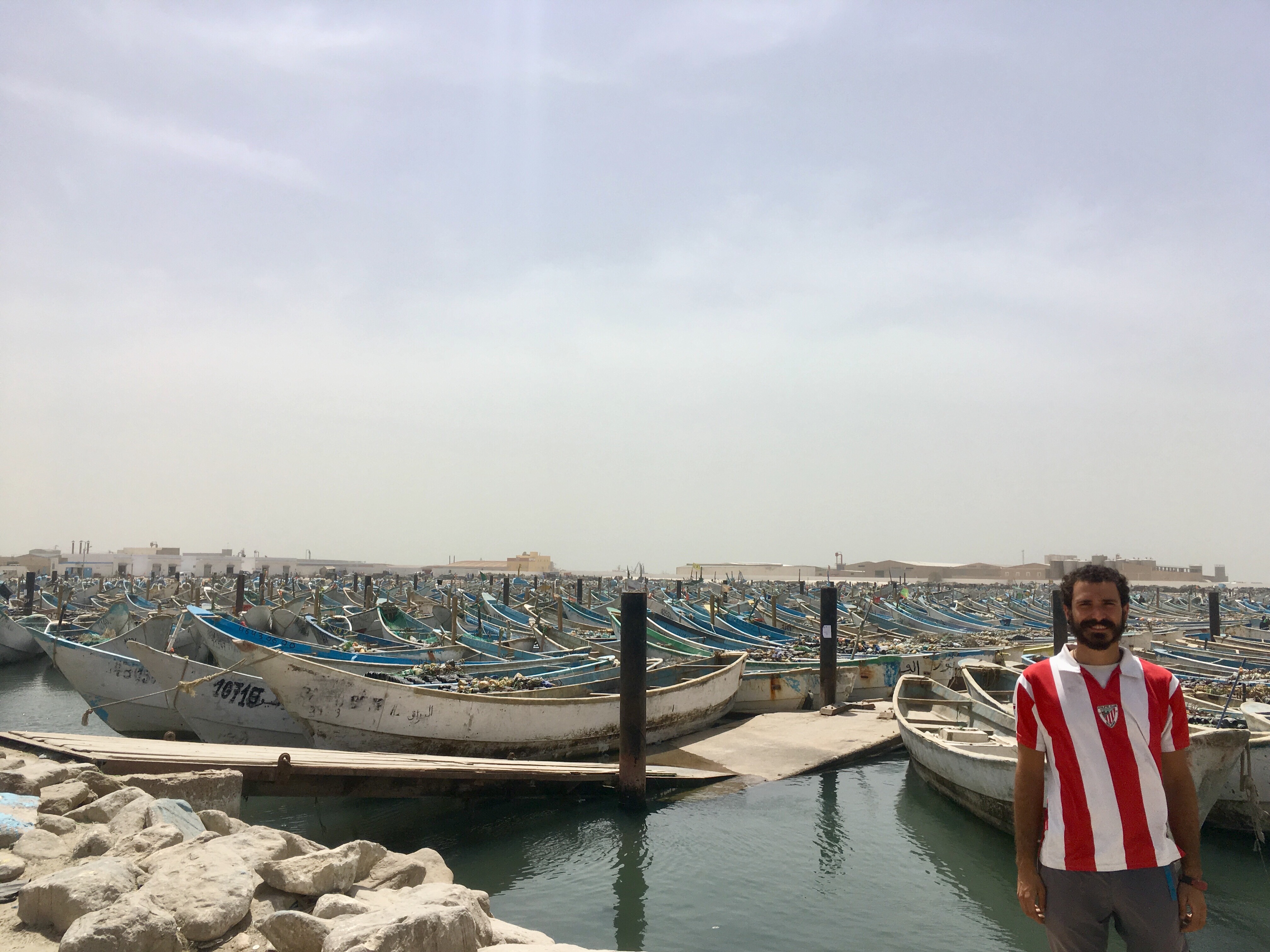
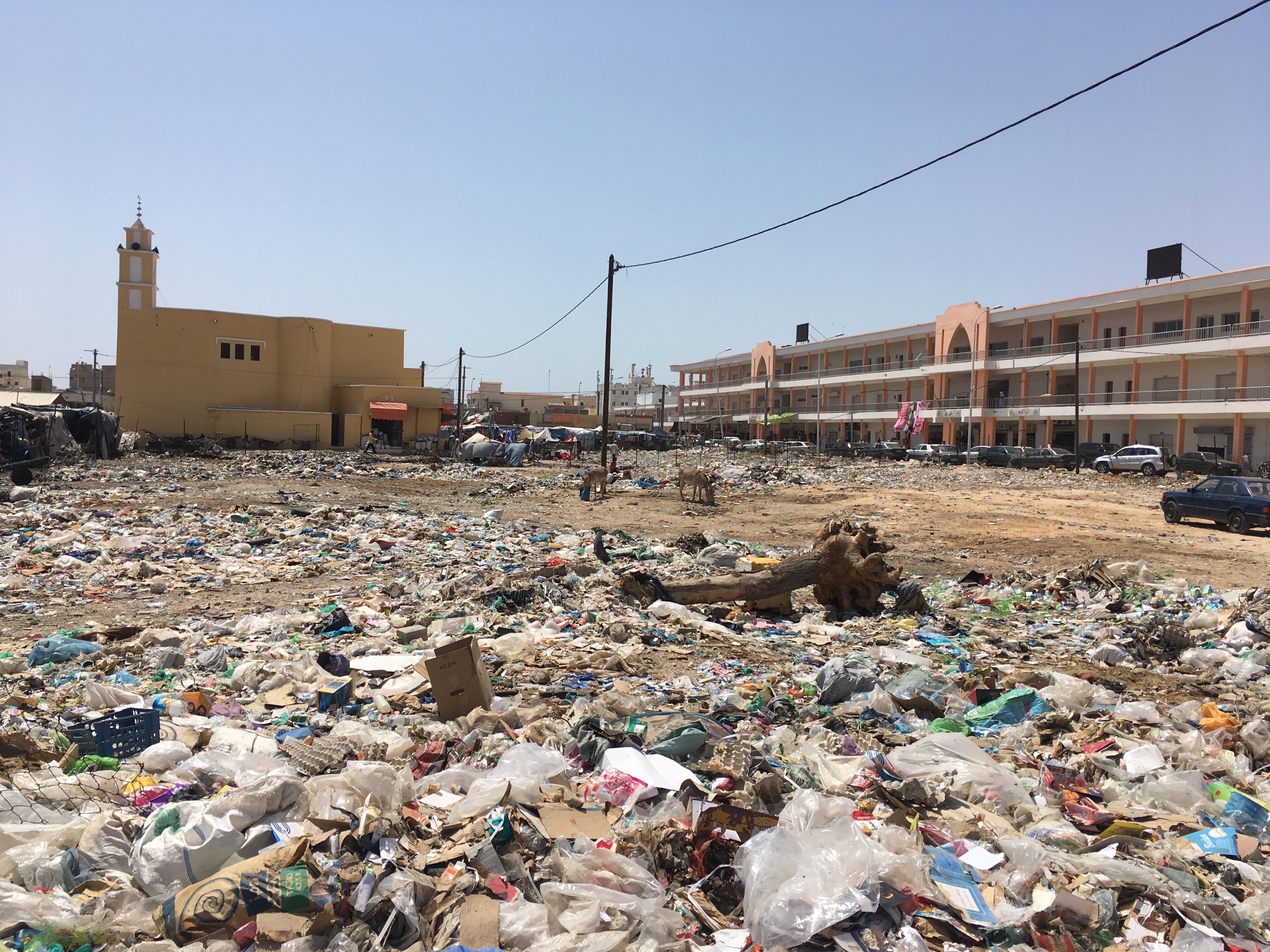
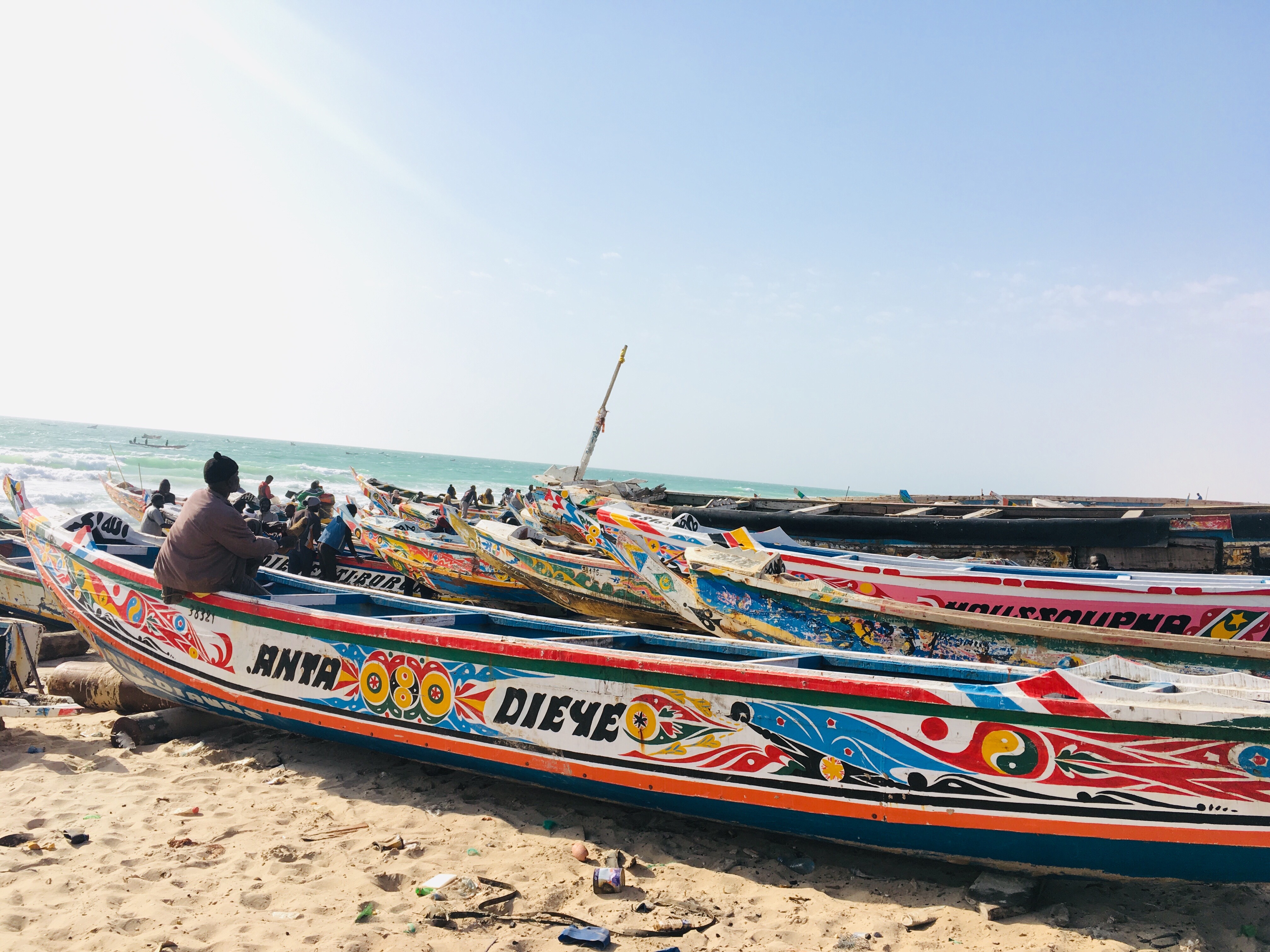
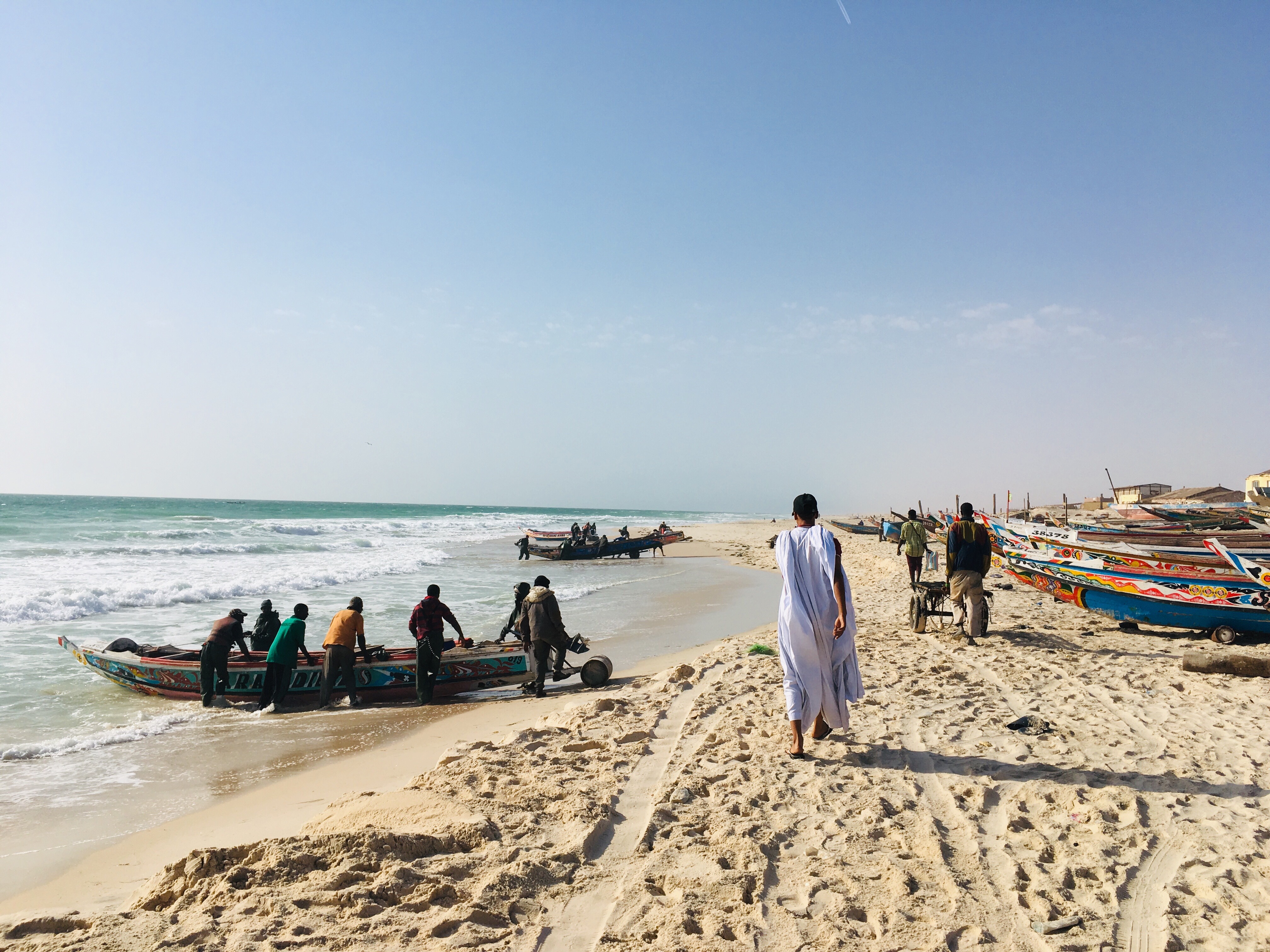
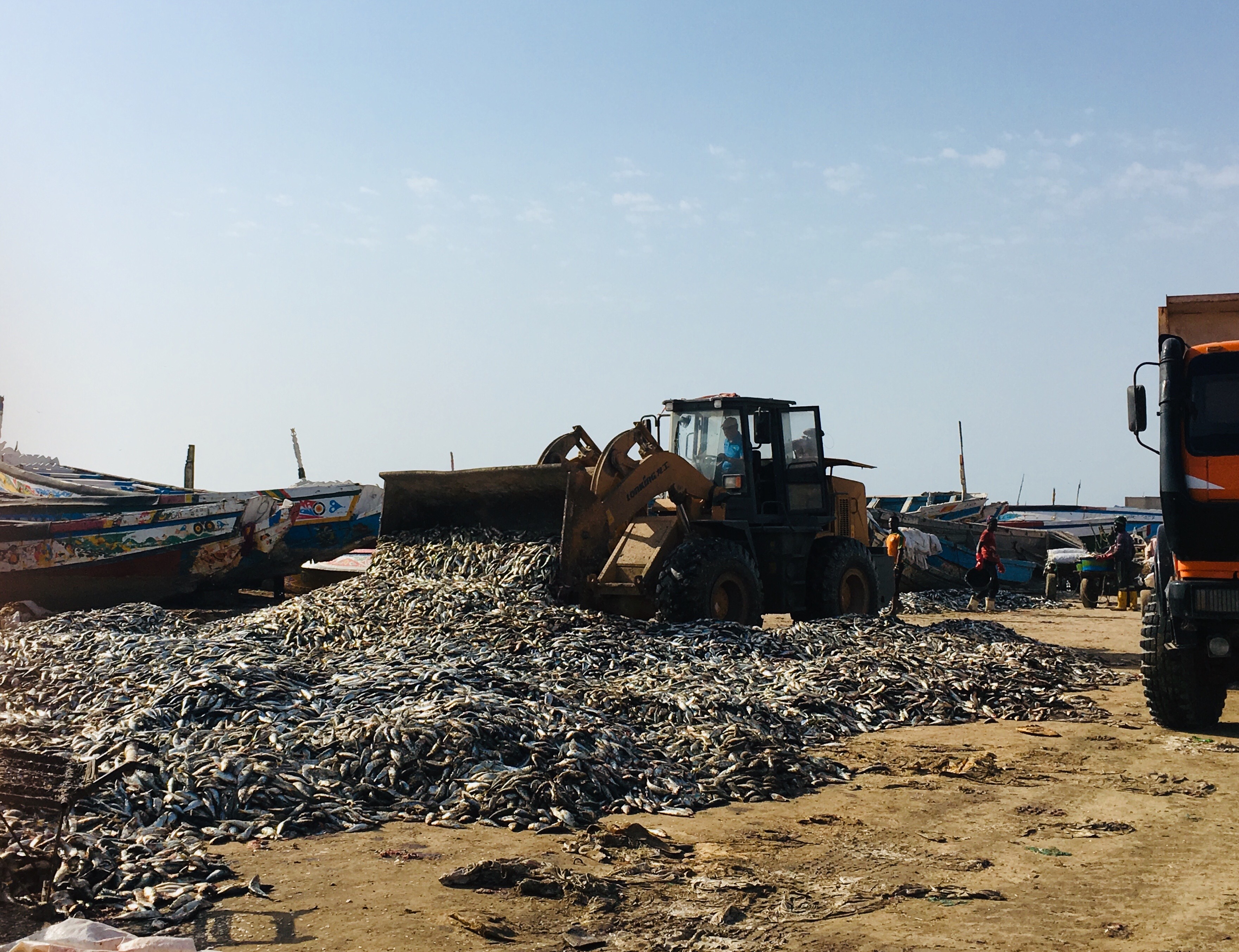
We go home and quickly fix Gaspard bikes. He wasn’t able to use the low gears for a couple of days -that wasn’t a problem in flat Sahara, but can become one in the future. After that, we hit Nuadibu port, where madness is waiting for us. The fishing activity is hectic and there are literally thousands of small boats, so close together that we find impossible to understand how can they exit the port. Unfortunately we start realizing how much plastic there is in the floor in Mauritania. It’s really a pity.
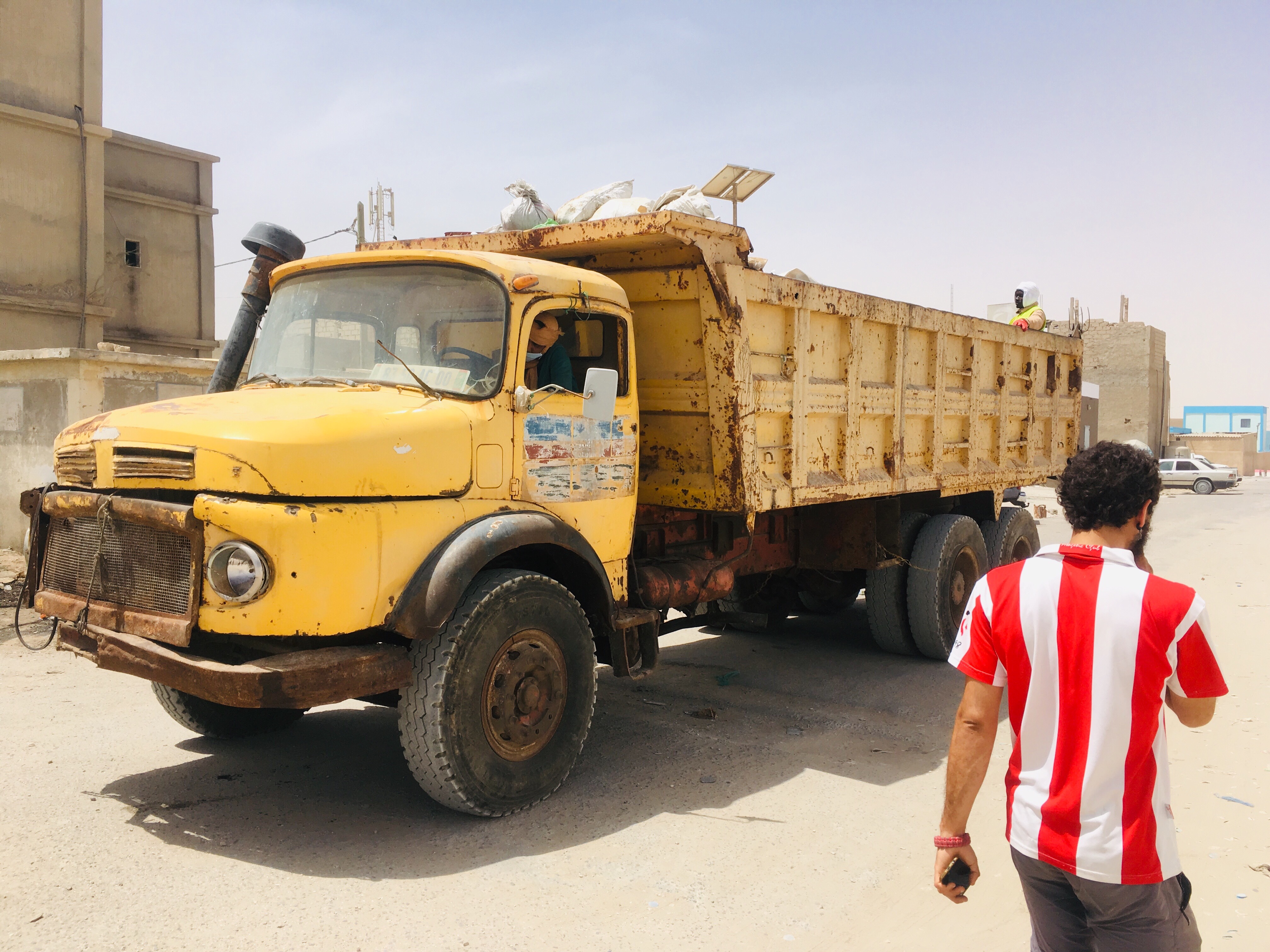
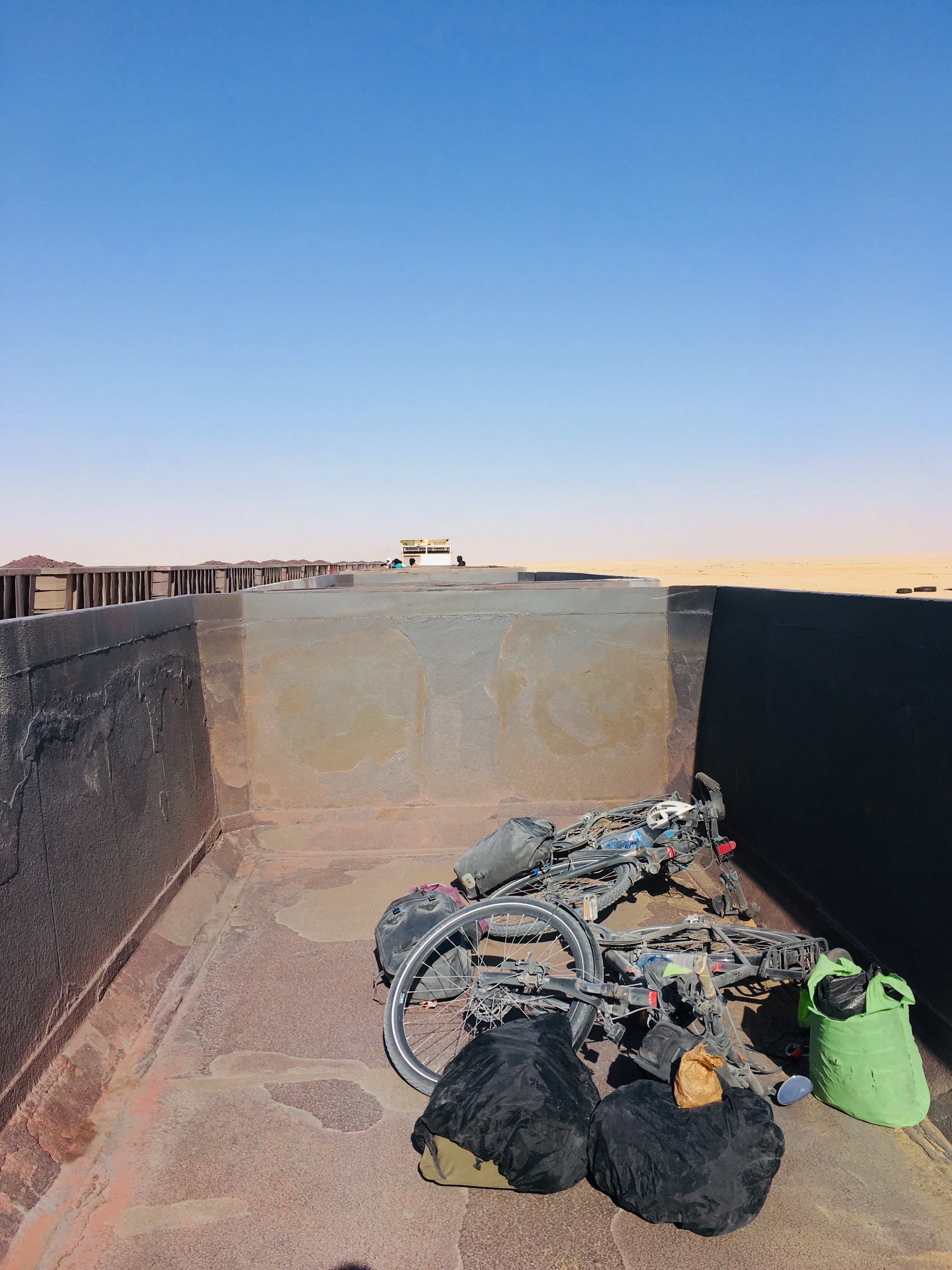
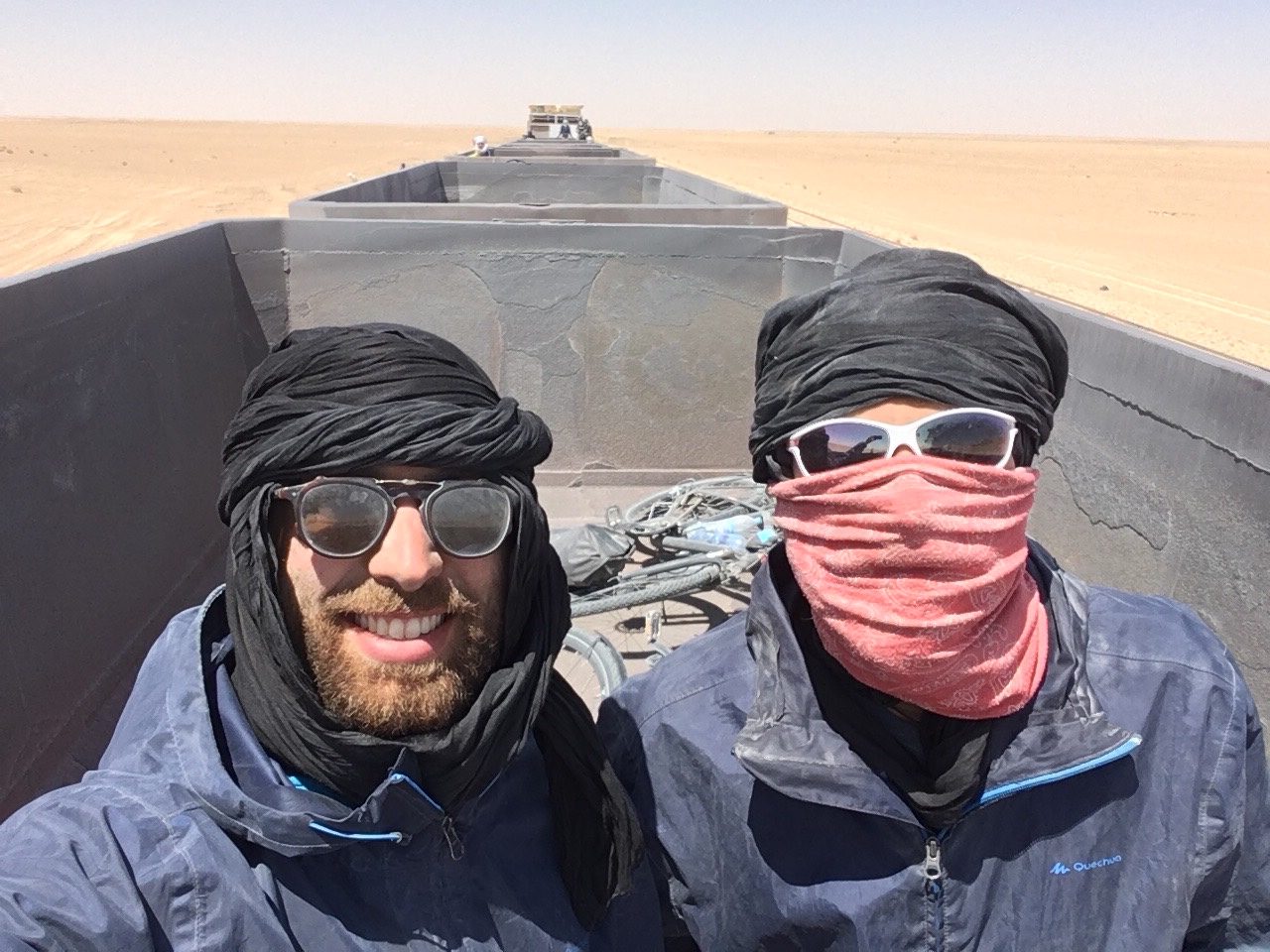
We meditate a bit our next move and decide to play it wild. We have heard about the SNIM Iron train, a 3 km long monster that brings all the iron from Zuerate, deep inside the country, to the port, and returns empty to the Sahara. Mauritanians jump for free in it and ride it for hundreds of kilometers in the empty wagons. The only problem is that no one knows exactly when the train leaves and that wagons are open air, so you pretty much end the ride covered in dust (see how to prepare in a coming post).
We hear that today it might leave at 2 pm so we rush to the station after buying food for the ride in a Chinese restaurant – there is a very big Chinese community in Mauritania for a long time, we think because of the mining and the fishing. We also eat something in a Senegalese restaurant. It’s surprising how many people from Subsaharian countries live in Mauritania. Salama has told us that they might well be 50% of the 4 million people living in this huge country.
we ask people in the street where the train station is, but one man tells us to go right and the man next to him to go left. As usual. The strong wind against us mixed with sand makes it very hard to go above 8 km/h. Once we arrive to the station, we meet a turkish man called Naim, the only other foreigner taking the train. Unfortunately, after successive fake alarms, we hear that the train will only arrive at 1 am from the port, so we fall sleep in the station after getting tired of playing chess. Gaspard wins for the first time. The atmosphere there is very special, many group of friends come hours before the train, turn the radio on, and drink tea on a carpet. A concept that we European cannot understand, we have always too many things go do. When the night falls everything becomes pitch dark and only the ambulant vendors bring some light to the place.

Day 69: Train Station – Choum
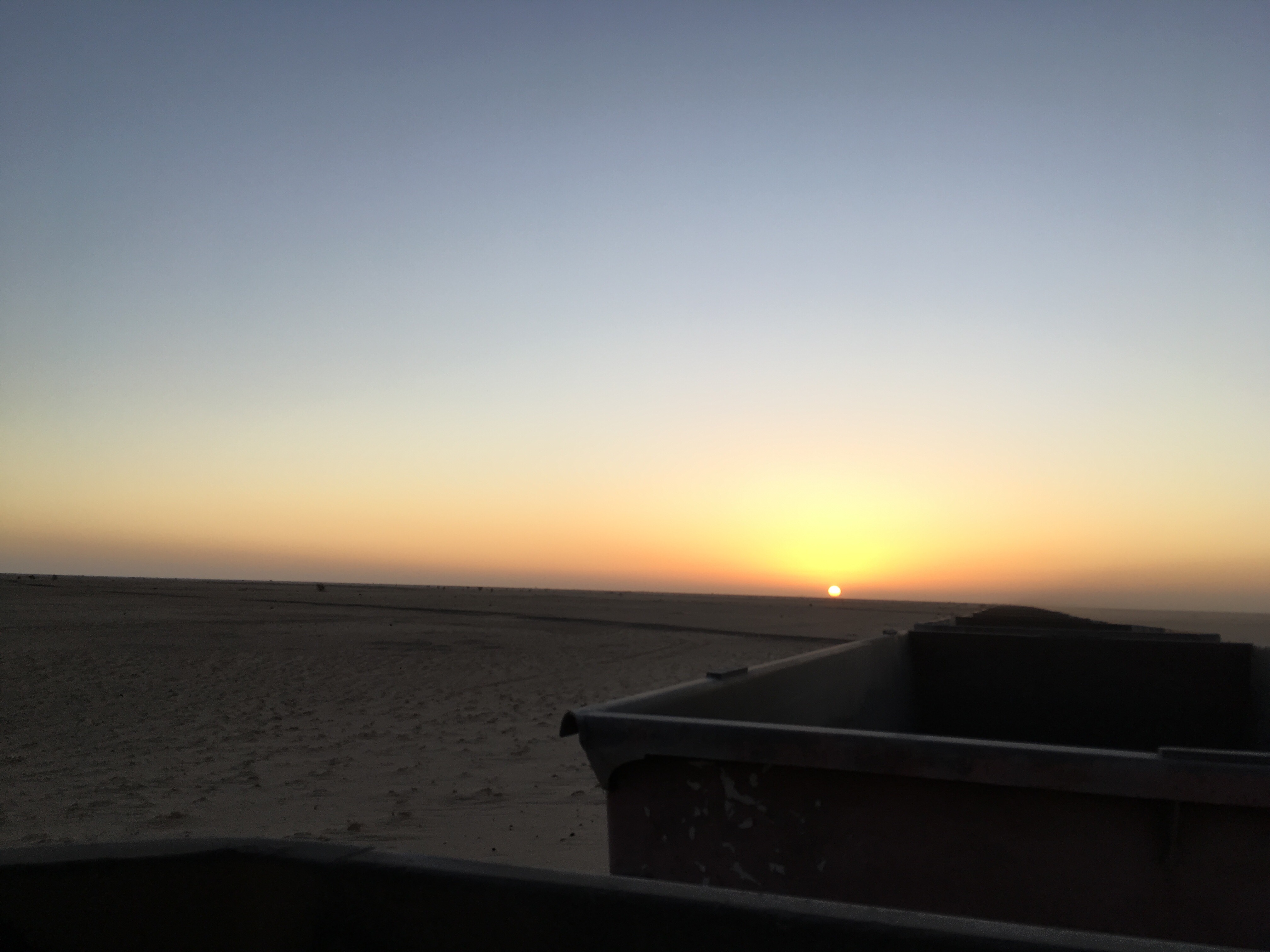
At 1 AM everyone starts going nuts and we rush to the train rails in the deepest darkness. The trains is indeed endless so we can pick a wagon just for ourselves. Luckily Naim is there to help us to take the bikes inside the wagon – they are about 3 m high. We get inside our sleeping bags, but it is impossible to sleep due to the dust and the endless Saharian sky showing us the whole universe. Wow. Periodically, the wagons hit each other and we are scared of biting our tongue because of the shock. We will see some people praying during the day and falling because of that. Javi has still stomach problems – the Chinese food doesn’t help – and has to improvise with a plastic bag… Yeah, this is the hard part of travelling like this.
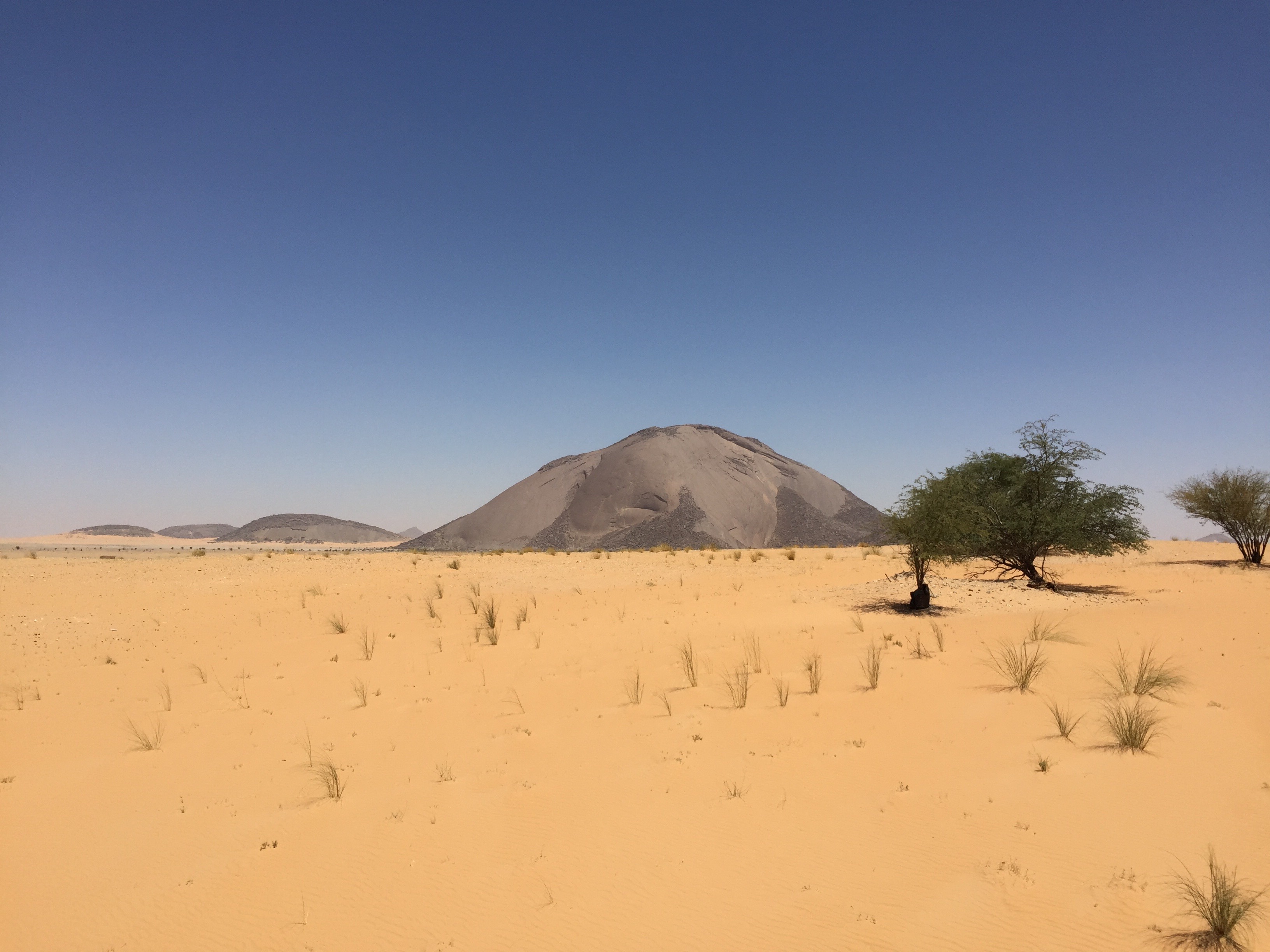
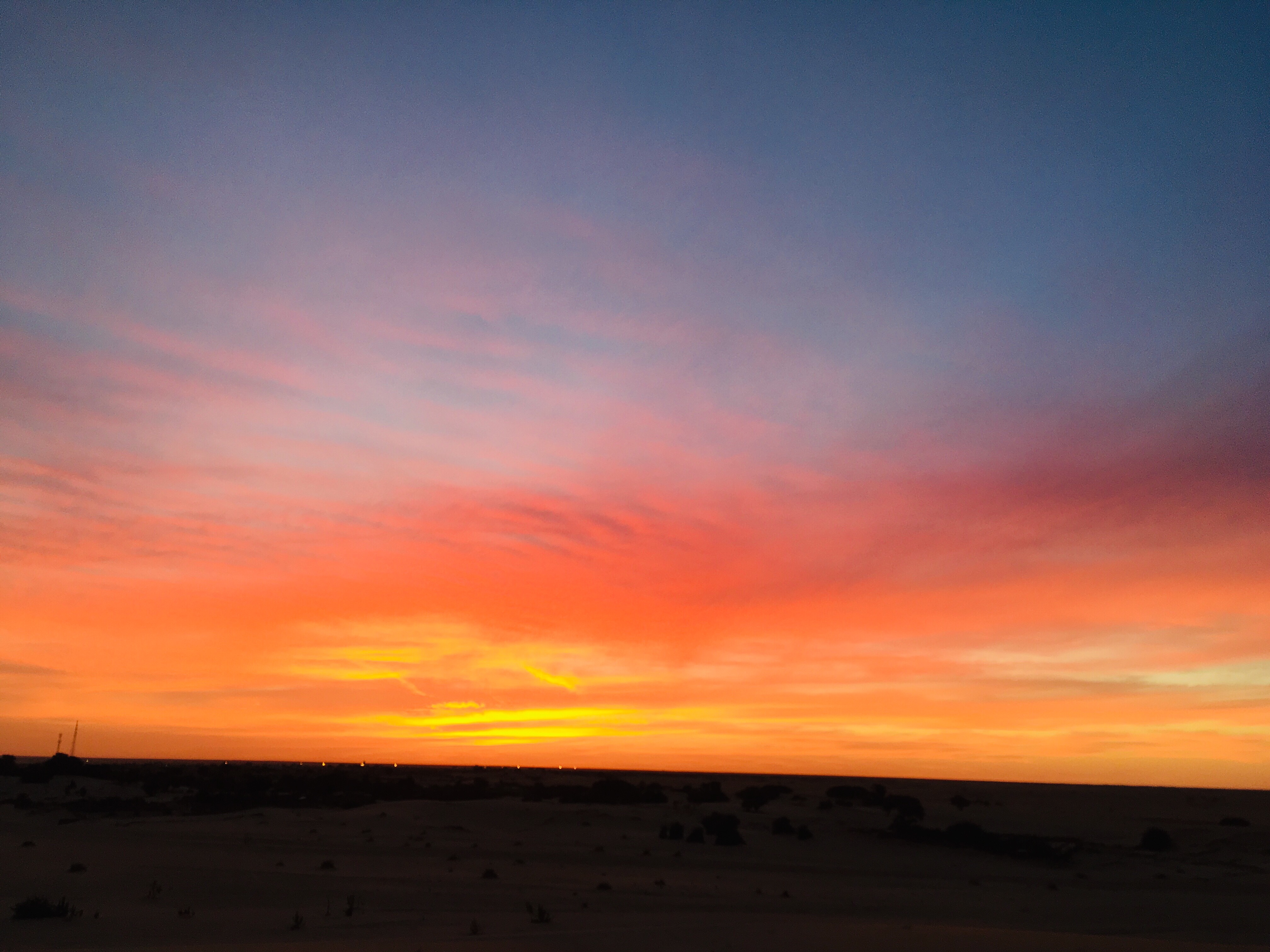
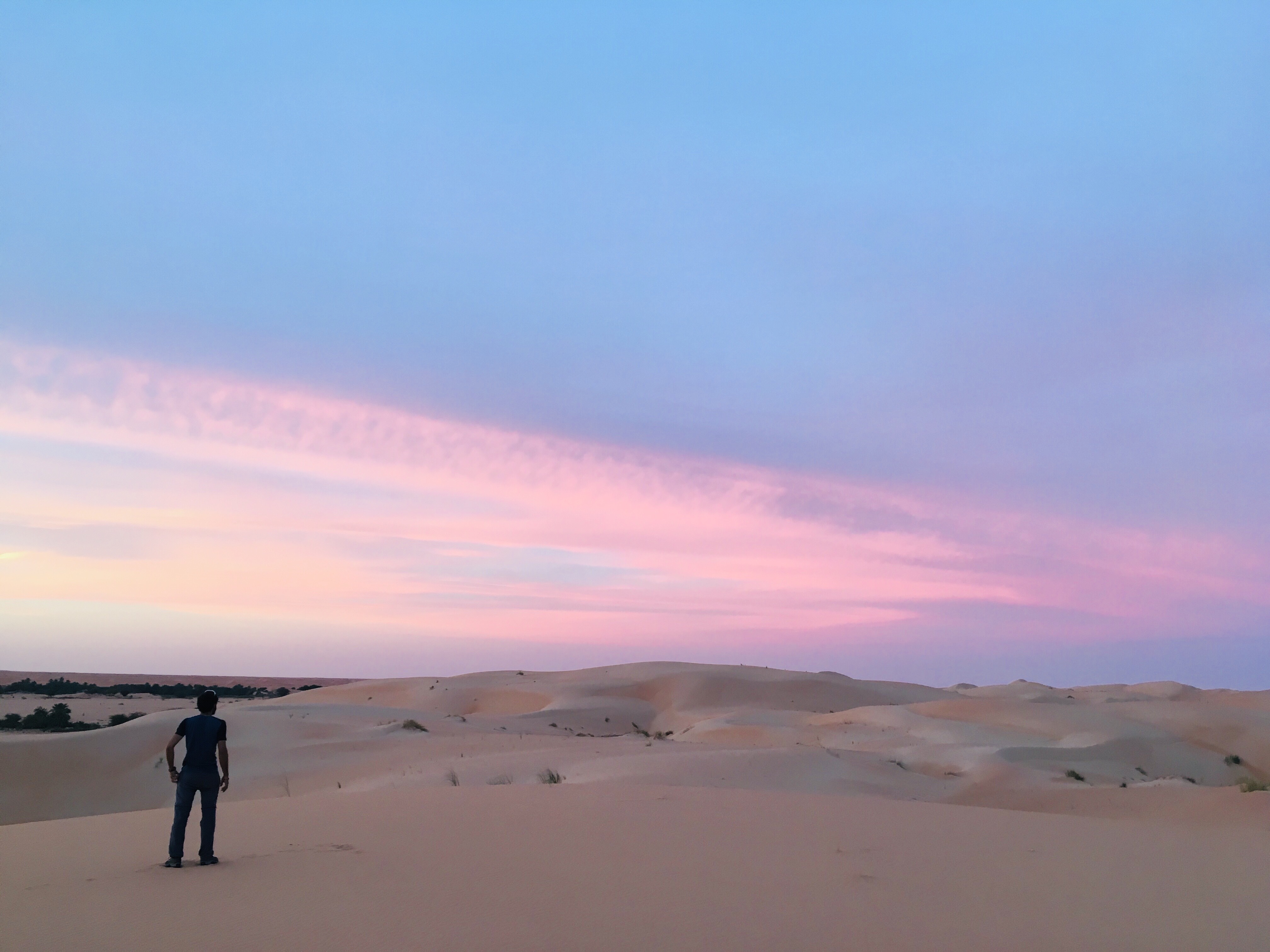
We set the alarm for sunrise and for 1 hour we remain silent enjoying this spectacle. We pass once in a while through some small villages and nomad campaments. There is a disproportionate amount of dead livestock near the train. Eventually we pass by Ben Amera, the 3rd biggest monolith in the world, which is about 600 m high. It really feels like we are in a movie.
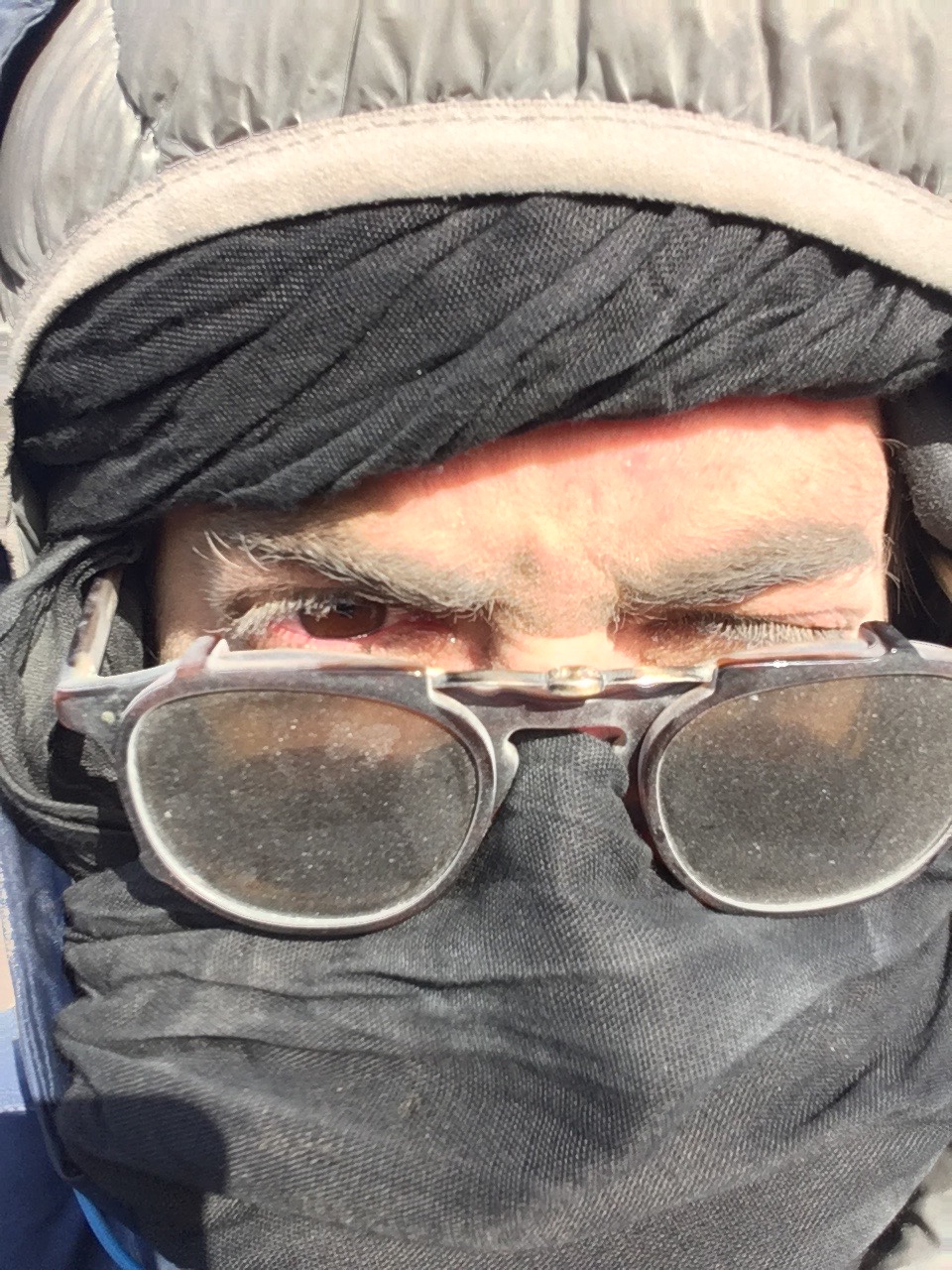

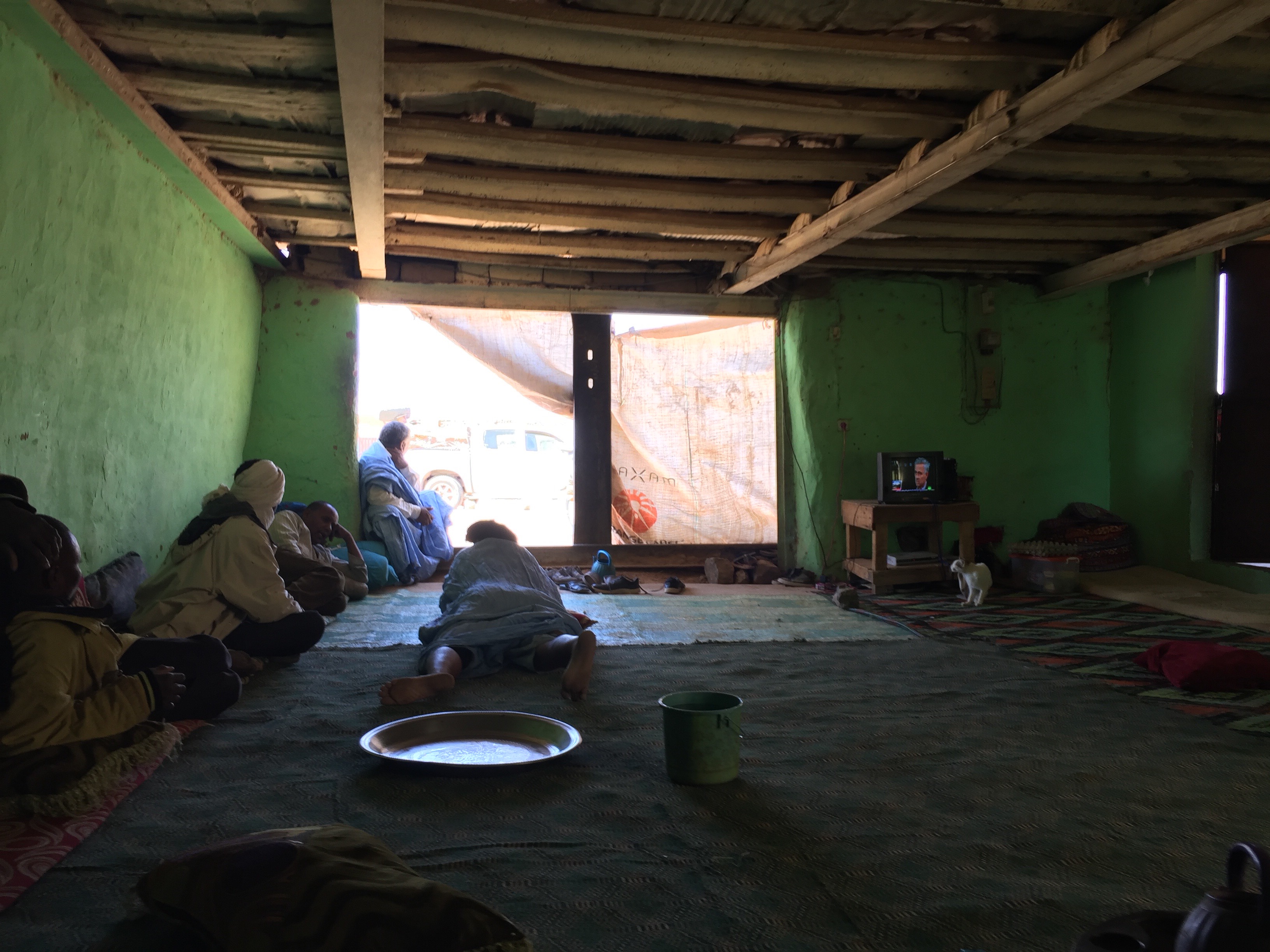
At 12 pm we arrive in Choum, where we step out and have lunch with locals. Most of the people are black here, and it is really poor. No cutlery in the restaurant, here you compress the rice with the hands and voilà. needless to say that we made a mess and people next to us laughed and showed us how they do it. Kids surround us and ask annoyingly for presents. They ask us if we are muslim and to say “Allahu Akbar”. In a moment of small chaos, while doing the maintenance of the bikes covered by dust surrounded by 15 kids that wanted to touch our body hair, our bike, or smell the sun block; someone stole Javi’s Swiss Army knife, which was in a bag. We get a bit upset after claiming it back and we think about going to the elderly of the village to ask for mediation, but we are so tired and dirty because of the train that we decide to just leave Choum.
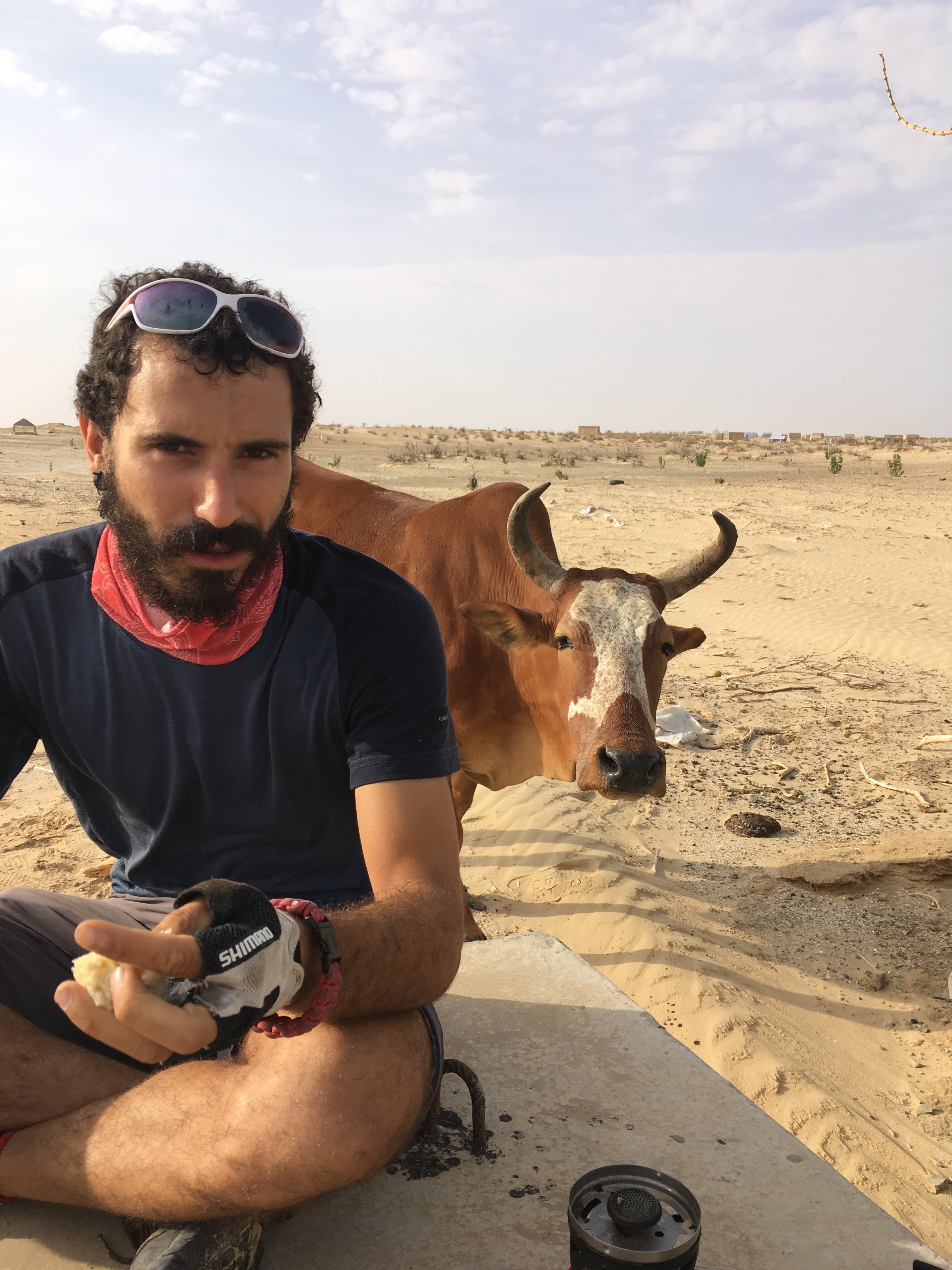
But that will not be the last unpleasant moment of the day. We leave Choum in a fantastic newly built road and 40 km after a family invites us to their home. We are happy to finally find the berber and saharaui hospitality in Mauritania. They offer us camel milk and show us how to play a local game. But suddenly they start to try to sell us stuff, and “joke” about selling us one of their kids and us marrying their 11 years old daughter! We sincerely hope that was a joke. Anyways, it gets uncomfortable, we suspect that all the kindness of the beginning was a ritual to engage after in a commercial exchange. After all, Saharaui people have always been merchants. But this is no exchange. They ask us directly for money, or for our suncream, belt, sunglasses, shoes. They even insist to see photos of us together with “our wife” to prove the, that we cannot marry one of their kids. We leave immediately in a harsh situation. What a pity. 10 km after we get off the road, find a camping spot, and sleep for 10 hours. This is our first night sleeping in the desert of Mauritania and we are a bit paranoid about wild animals. Javi wakes up twice during the night shouting “Ostia there is an animal”, “Gaspard where is the tent?!”. At least one of us laughed a lot.
Day 70: Choum – Atar
We leave early and pass our first police check point, where a police officer sleeps pleasantly. The landscape is very interesting: some nude mountains emerge from the desert, and after a couple of super enjoyable mountain passes that remind us of Morocco, a savannah appears. It looks like the Lion King could appear at any time. We keep riding until Atar, the capital of the Adar valley, where our UN friend from Bir Gandouz recommended us a cheap hotel, Imini. It is very nice and ridiculously cheap. The military forces are very present in that part of Mauritania and it shouldn’t surprise you to see bullet proof cars with machine gun passing by.
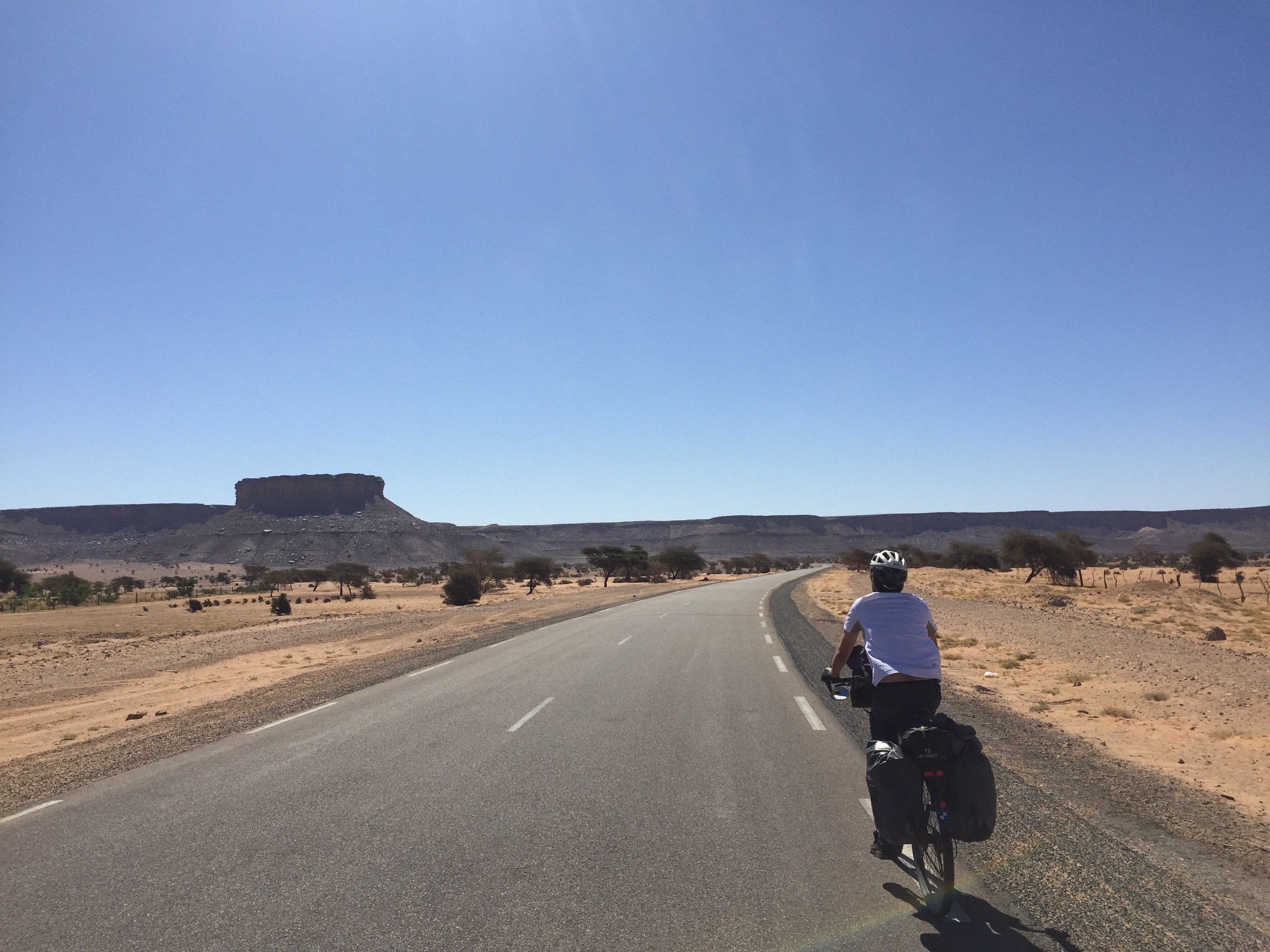
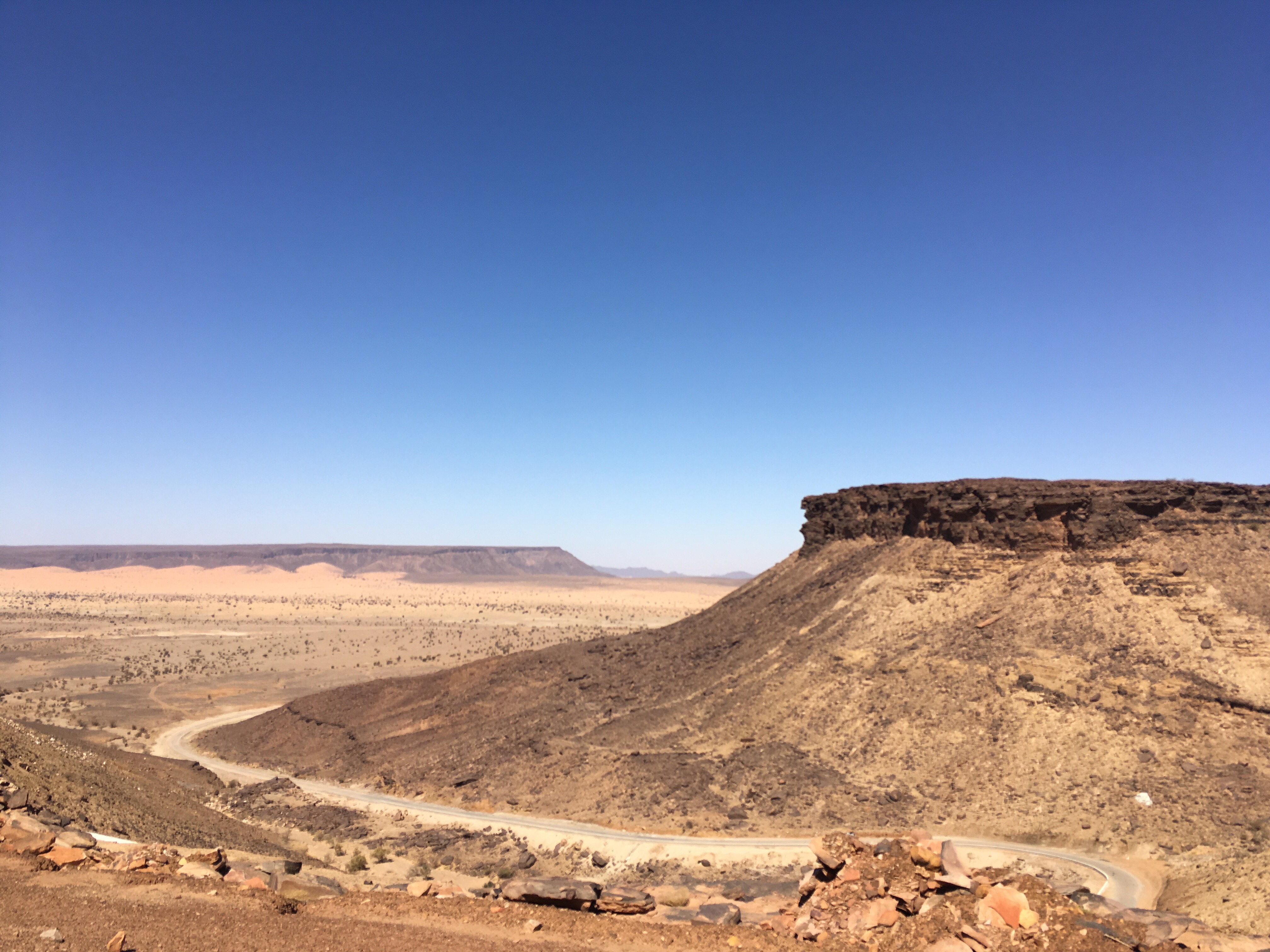
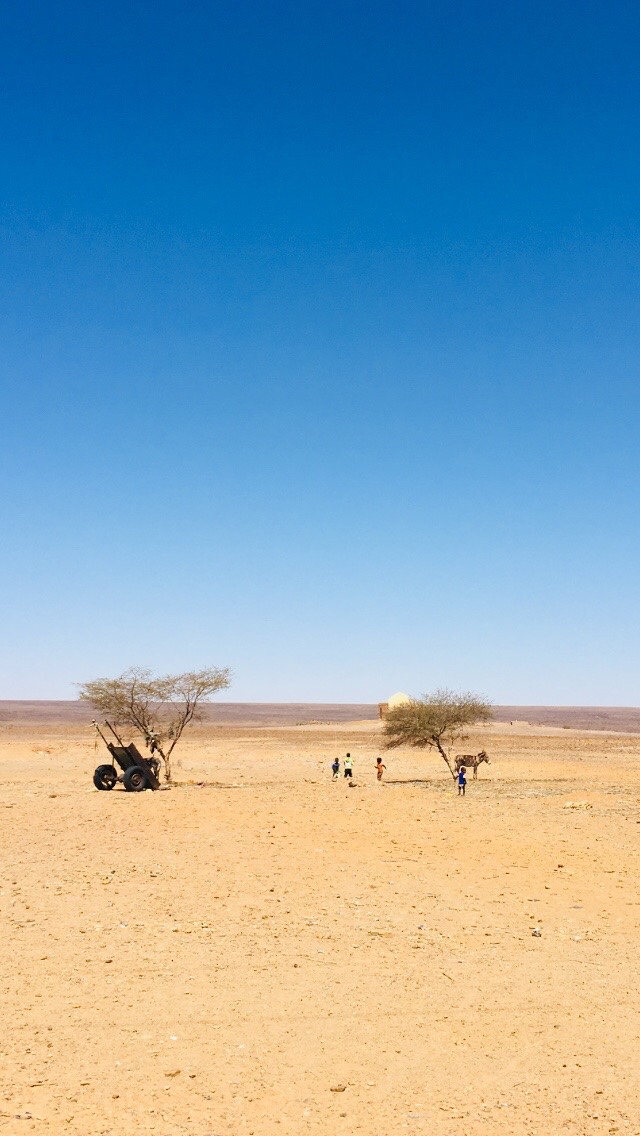
There is not much more to do in Atar, so we eat a fantastic 1€ dish in a senegalese restaurant which is a home, and decide to take a “holiday” next day to go in public transport to Chinguetti, one of the most ancient towns in Mauritania, since we are told that the road is terrible to go by bike. That dinner was a show. We arrive at 6:45 and are told that the dinner will be ready at 7pm. We will wait, ask many times and eventually have dinner at…. 10PM.
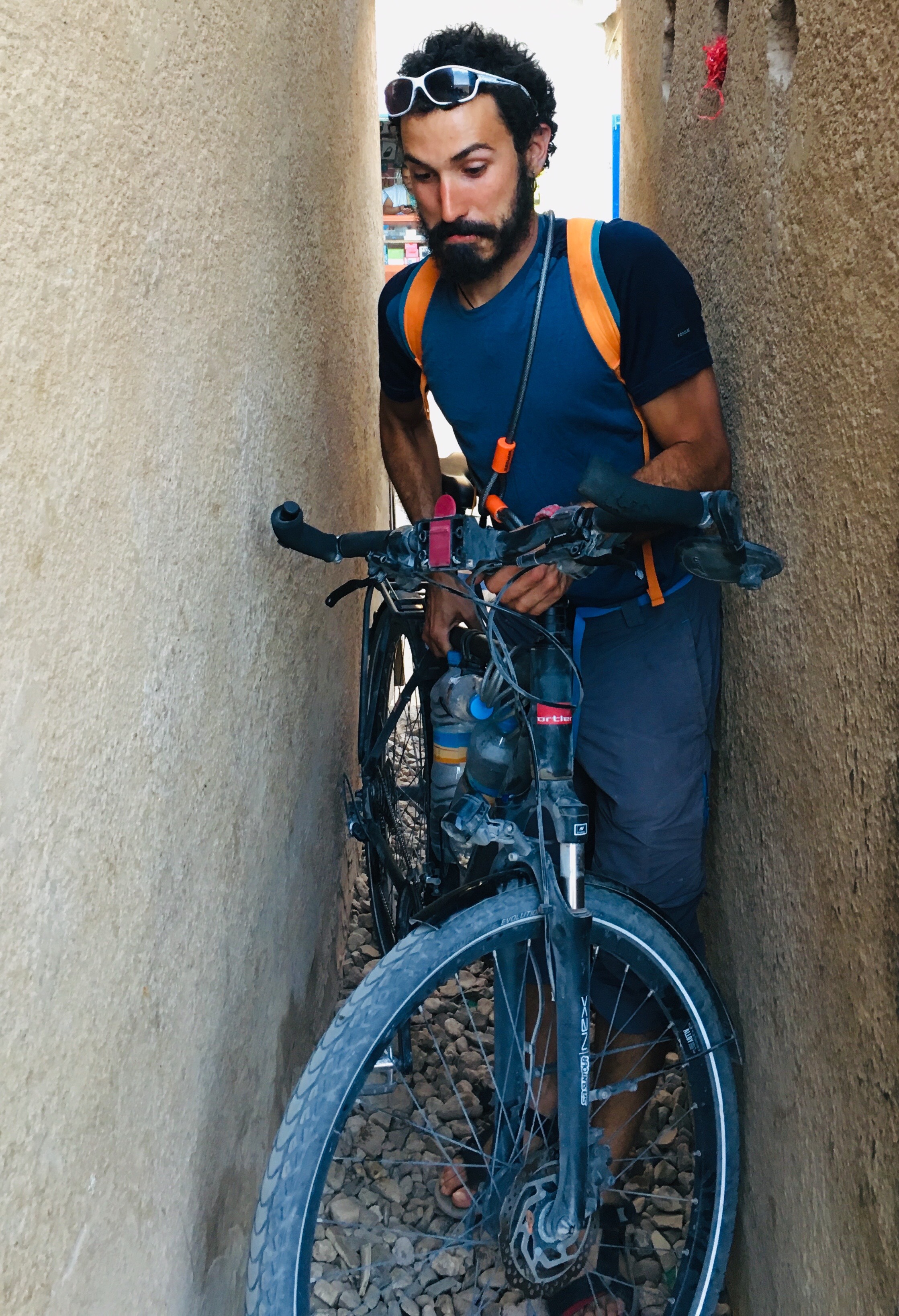
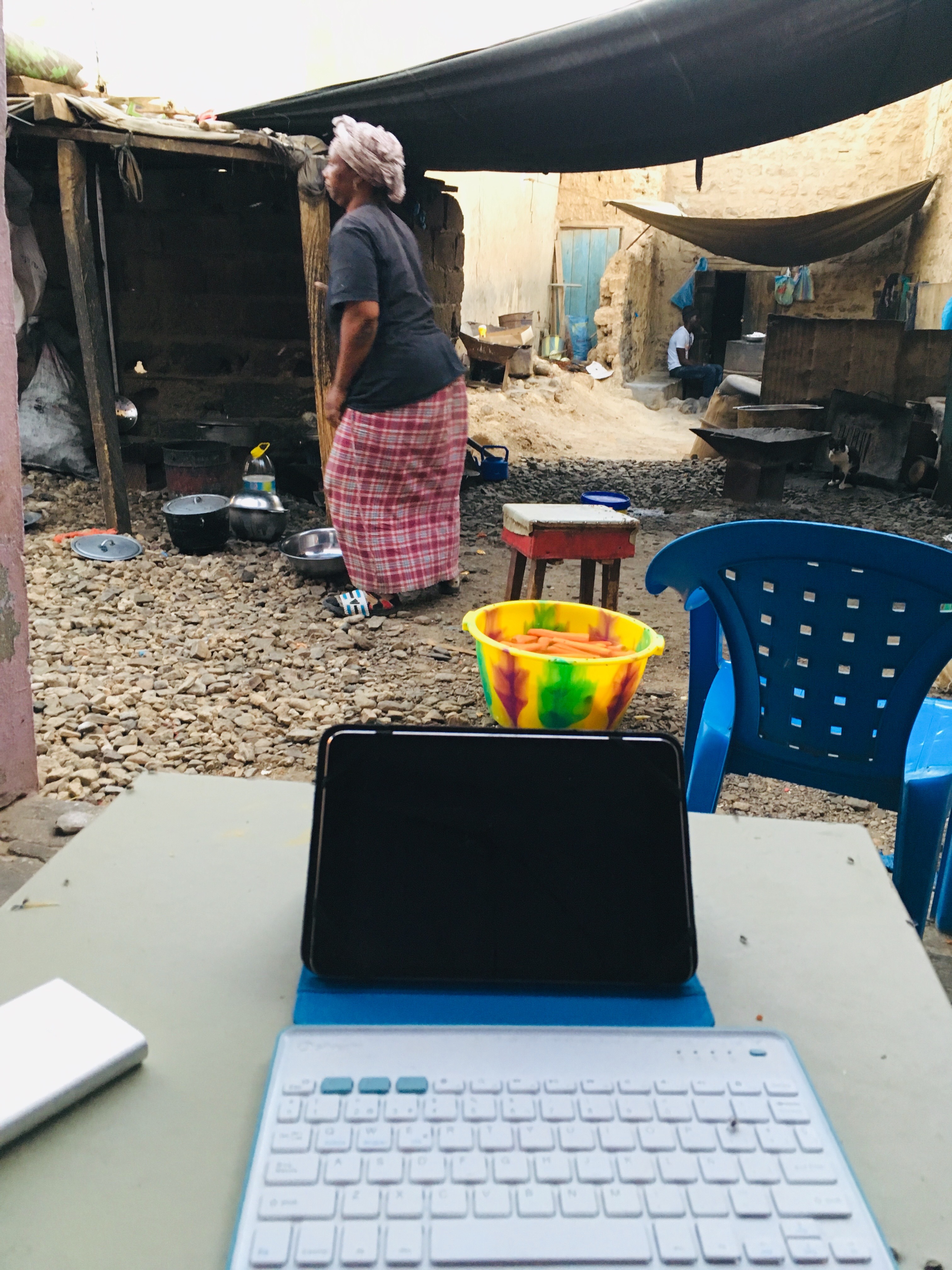
Day 71: Atar – Chinguetti
The public taxi picks us at 7 am. The road goes through a beautiful mountain pass, it is incredibly nice and we regret a bit not cycling it. But the clock is ticking, our return time is getting closer and we want to have time to cycle in Senegal without stress.
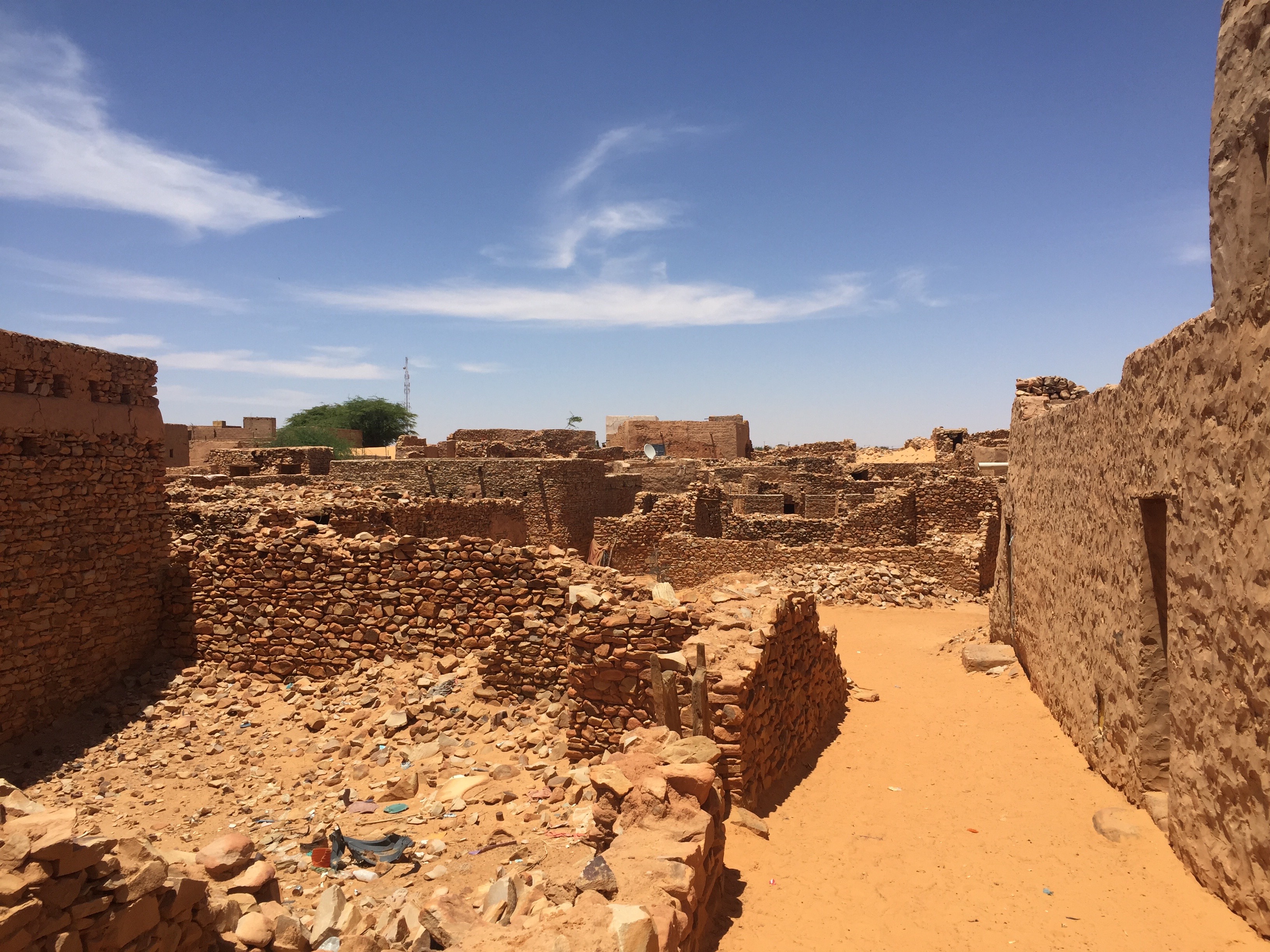
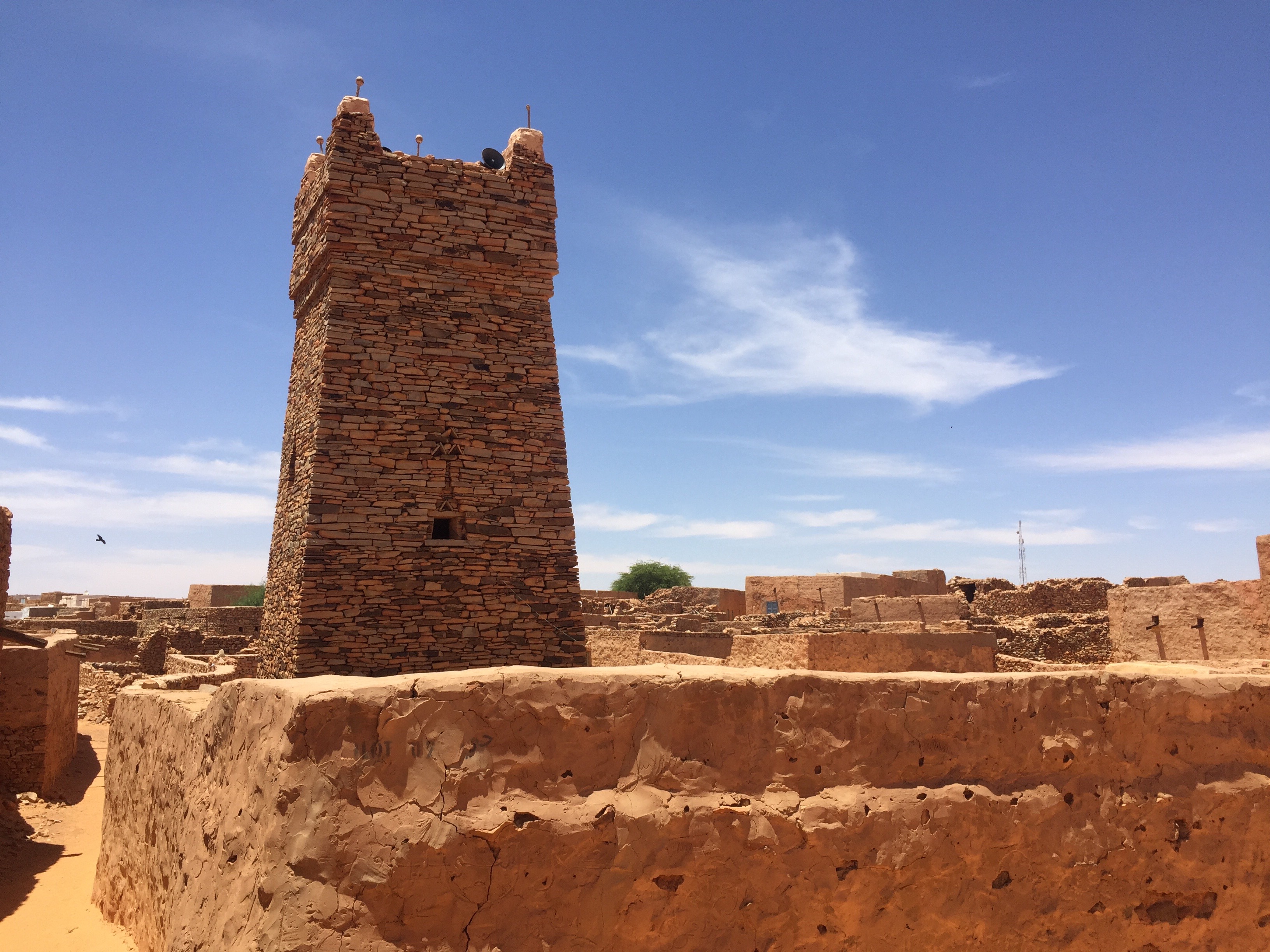
We arrive to Chinguetti, the 7th most holy city of islam. It used to be an important transaharian commerce point, and the history records say that one day more than 30’000 camels passed through it. In addition, it was one of the main gathering places for pilgrims of the Magreb going to the Mecca. Last but not least, the city holds many very old manuscripts as it uses to host many schools of rhetoric, law astronomic, mathematics and medicine. In the last centuries it has been progressively swallowed by the desert and only a EU project has taken its ancients libraries, mosques and houses out of the sand.
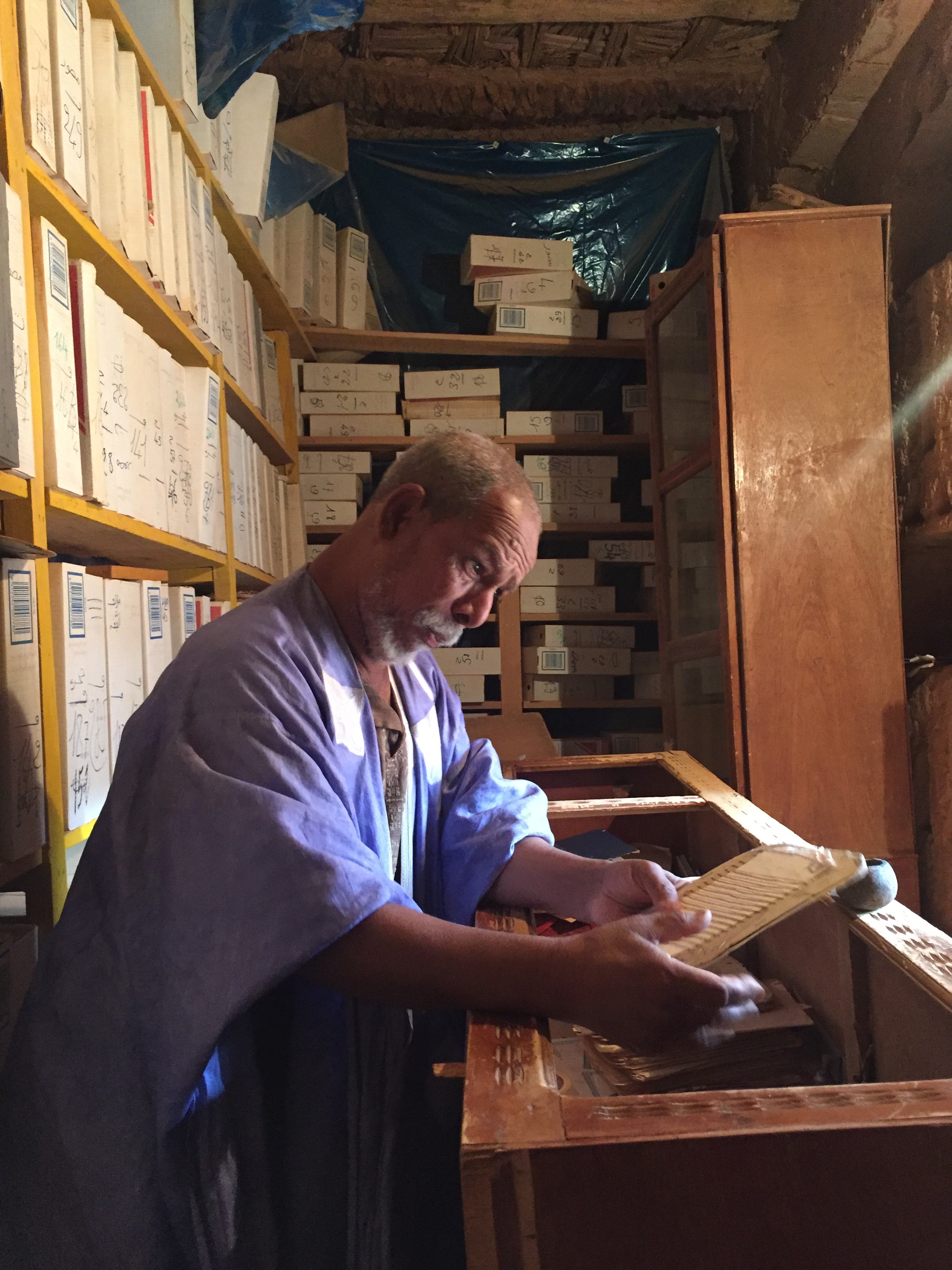
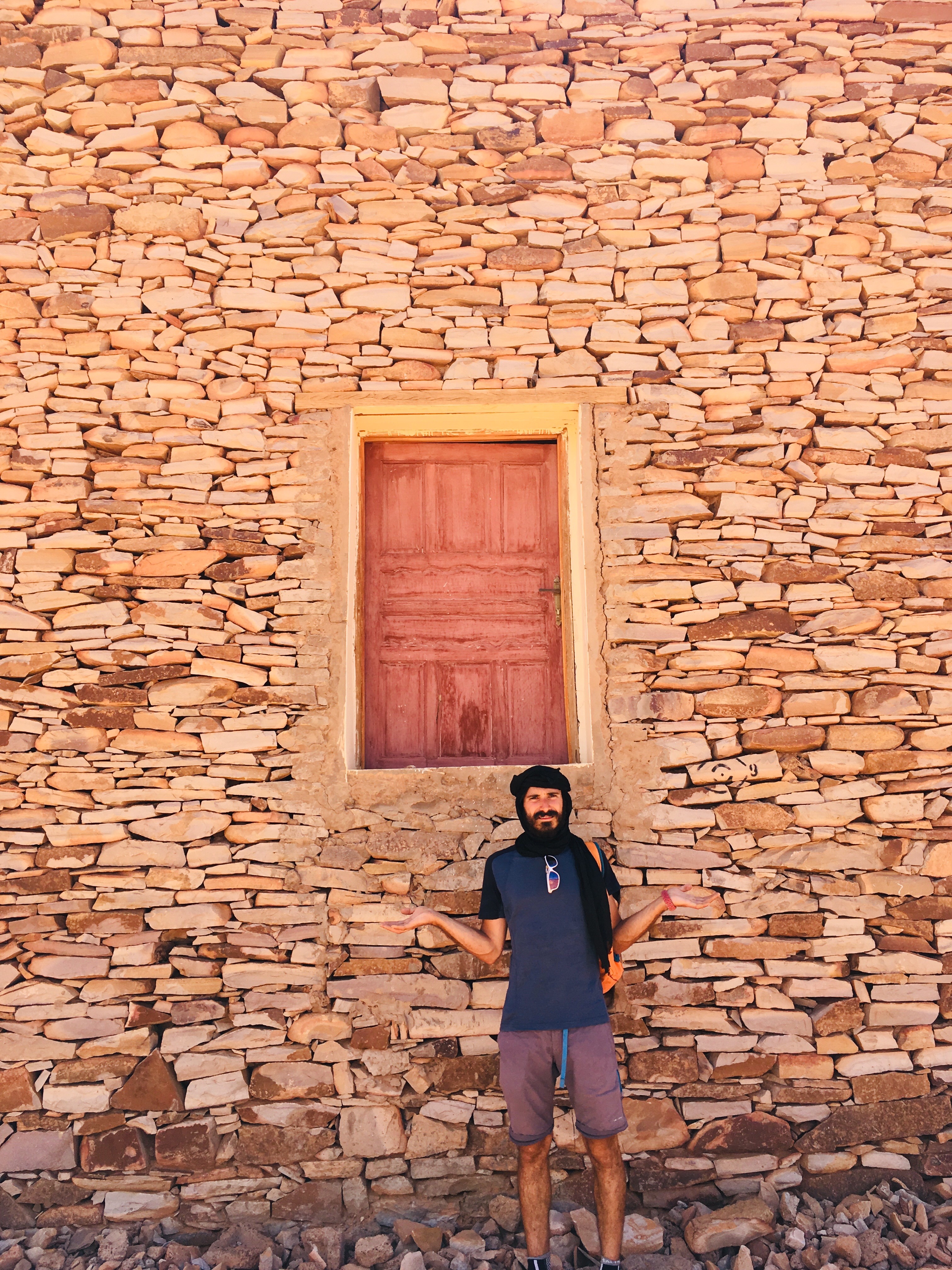
We are the only “tourists” in the town, and all the artisans push way too much to sell us stuff. It is understandable due to the scarcity and poverty of the region but still tiring. We visit one of the ancient libraries of the town, Ahmed Mahmoud, where an old man called Serif shares the ancient knowledge of his family with us with a passionate devotion. Listening to him is marvelous, a pleasure for the ears. Mauritanian feminine beauty standards are different from European ones and can be explained by history. In the nomad days, stealing food was easy. thus, little girls were forced to eat a lot of milk with couscous to get fat, so that they couldn’t be stolen. in addition, having the fattest girl meant having a wealthy family. This is what we were told. 🤷🏻♂️

 Cycling Pirates
I really enjoy your exciting adventure with surprise, emotion, atonishment, sometimes fear ( not many times), but joy and tenderness too….definitely fascinating!!
Congrats!! This is a fantastic trip!!